When most people think of investing, they picture stocks, real estate, or crypto. But some of the highest-return investments you can make in your 20s have nothing to do with money. By putting time, energy, and even some cash into building high-value skills, improving your health, strengthening relationships, and gaining diverse experiences, you set yourself up for decades of returns. This guide breaks down the best investments in your 20s that go beyond money.
Investment #1: Health
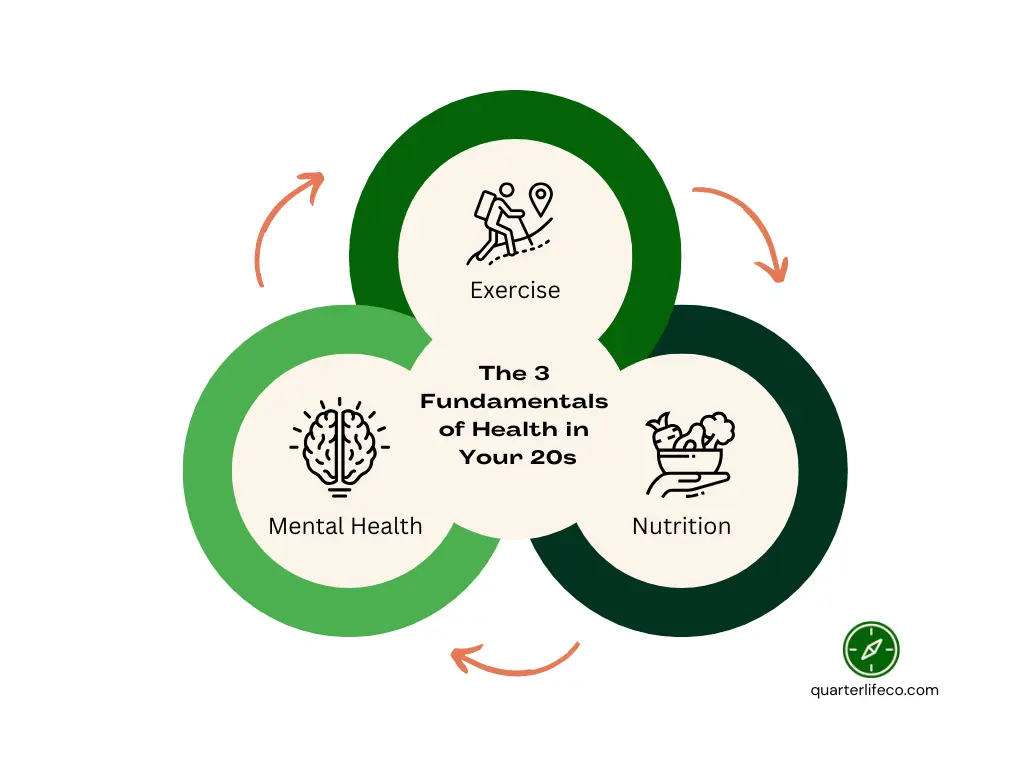
Think of your 20s as a clearance sale for health. At this stage, your body’s in peak condition with fast recovery, high energy, and adaptability. However, like any sale, it won’t last forever. This is the easiest time in your life to build muscle, lose weight, and get fit. Investing in your health now means that when you’re older, you’re simply maintaining strong habits instead of trying to completely reverse years of neglect, which is a much harder task.
And just like financial investments, health habits compound over time. In the short term, you might not feel the effects at 25. However at 35, they’ll catch up to you, for better or for worse. Of all the best investments in your 20s, building strong health habits is the one that will pay you back every single day for decades.
Interesting Stat That’ll Motivate You
According to developmental research summarized by OpenStax, habits formed in early adulthood, especially around diet and exercise, are the strongest predictors of long-term health. In other words, if you wait until your 30s, you might be stuck undoing years of preventable damage while trying to form habits that are much harder to build.
6 Actionable Health Investments for Your 20s
- Buy a Gym Membership: Having a dedicated space for exercise helps you build consistency, community, and motivation.
- Build a 3-Part Fitness Plan: Include muscle training, cardio, and stretching (don’t skip stretching its insurance against injury). Create it yourself or invest in a trainer to design one for you.
- Learn Nutrition Basics: Master five easy, healthy recipes you can cook on autopilot to avoid relying on takeout.
- Schedule Annual Check-Ups: Early detection can save you years of trouble later.
- Master Recovery Habits: Prioritize quality sleep, stress management, and rest days. Recovery is where your body grows stronger.
- Mental Health: Therapy, journaling, and deep conversations with your inner circle aren’t just for when things are bad. They’re a tool for self-awareness, growth and building emotional resilience. Think of it as the gym but for your brain.
Action Step: Take on a Fitness Challenge
Pick a fitness challenge that excites you. Like signing up for a 5k, committing to 50 push-ups a day for a month, or mastering five healthy recipes. Once you get one health habit rolling, it’s way easier for others to follow.
Investment #2: Build High Value, Transferable Skills
Your 20s are the prime time for stacking skills that will give you lifelong leverage, in your career and personal life. You can build them through formal education, online courses, hands-on trial and error, or simply reading and applying what you learn.
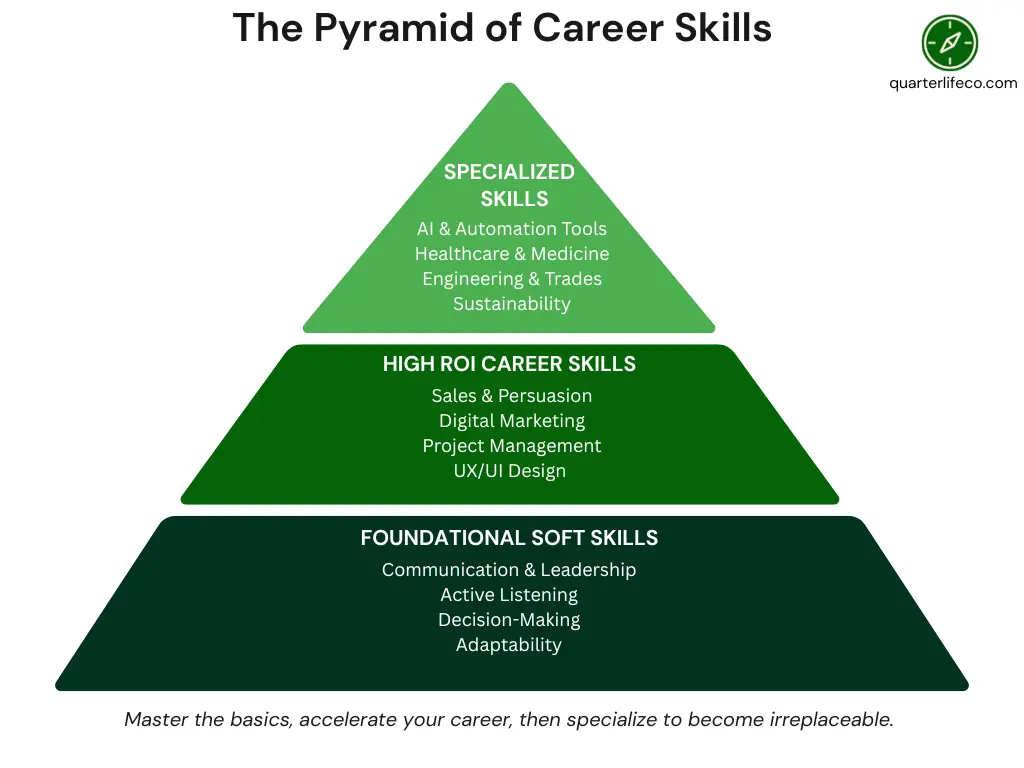
Skills that are hard to automate, transfer easily across industries, and directly impact results will always be in demand. These high-value skills give you maximum flexibility for decades. The rarer the expertise, the higher the earning potential, and the harder you are to replace. As a result, if you’re serious about making the best investments in your 20s, focus on high-value skills that keep you competitive no matter how industries change.
Ways to Invest in Increasing You Skills:
- Pick 1-2 high ROI skills and go deep: Specialists get paid, generalists get played. Mastery of one or two skills beats dabbling in ten. Specialization is the secret to high paying careers. It’s how you command stronger pay and become irreplaceable. Think of a cardiologist or a developer fluent in a rare programming language, their niche expertise commands higher rates and makes them invaluable.
- Double down on strengths that can’t be automated: Focus on skills you’re naturally good at, enjoy, and that technology can’t replace. Leveraging your natural inclinations gives you a built-in competitive edge, making it harder for others to match your performance.
- Learn by Doing: Dive into hobbies, projects, and side hustles to figure out what you actually enjoy and excel at. Real-world action teaches you faster than theory. The added benefit is you’ll pick up skills and experiences you can’t get from a classroom or book.
- Read, read, read: Expose yourself to a wide range of topics through reading. Breadth of knowledge gives you a foundation, and once you have breadth, you can go deep in areas that match your strengths and interests. Reading is one of the fastest ways to expand your perspective, spark fresh ideas, and uncover strengths. Check out our book recs for people in their 20s.
- Earn certifications: Get credentials in areas that will boost your career value, like Google Analytics, coding basics, CPR or other industry-specific certifications. Certifications can validate your skills to employers, ultimately opening doors to opportunities you might not have gotten otherwise.
- Purse formal education: If you’ve identified a field you want to master, college or trade school can provide the structured foundation and credentials you need.
Examples of High-Value Skills to Master
Business & Interpersonal
- Sales and Persuasion: The lifeblood of every business. Directly impacts results.
- Digital marketing & content strategy: Reach the right audience and you can turn attention into revenue.
- Project management: Keep work on track, on budget, and on time.
- Negotiation & conflict resolution: It’s a skill to find harmony with disagreements and flip them into progress.
- Leadership & communication: Managing teams, setting directions is key to growing a successful business.
Technical Skills
- AI systems & Automation Integration: Knowing how to implement, customize, and maintain AI tools for businesses.
- Plumbing & HVAC Systems: Essential trades like this can’t be offshored or fully automated.
- Medicine & Healthcare: Doctors, nurses, physician assistants, and other clinical roles require human judgement, empathy, and deep medical knowledge. Hard to automate or replace.
- Civil Engineering: Design, construction, and maintenance of infrastructure is a deep skill that is more recession proof and harder to automate.
- Sustainable Development: Creating systems and infrastructure that balance development with environmental responsibility is an important job for the future.
Don’t Underestimate the Importance of Soft Skills
You might think soft skills aren’t real skills, but they are. Most people never intentionally practice decision-making, active listening, or relationship-building. Doing so instantly puts you ahead of the vast majority of people. These abilities are timeless and show up in every area of life, from your career to your personal relationships. According to LinkedIn’s 2019 Global Talent Trends report, 92% of talent professional and hiring managers say that soft skills are just as important, or even more important, than hard technical skills.
Future Proof Your Career From AI
With AI transforming industries, adaptability and lifelong learning are essential. The ability to learn quickly and pivot will keep you employable no matter the shifting job market. Technical skills are extremely valuable, but they’re also specific, and some may be automated sooner than you think. Soft skills on the other hand are transferable across industries and careers, making them an asset that will keep you valuable no matter the changing climate of technology.
Action: Master a Skill for the Next Year
Pick one skill that aligns with your strengths, passions, and future opportunities. Commit to mastering it over the next 12 months. Do things like reading about it, watching informational YouTube videos, and even completing a professional certification or course. Going all in on a skill can be incredibly rewarding and open up doors you didn’t even know existed.
Investment #3: Solo Travel
Solo travel in your 20s isn’t just a vacation, it’s an investment in yourself. With fewer responsibilities, peak curiosity, and maximum adaptability, this is the decade where new experiences can completely reshape how you see the world. The earlier you step outside your comfort zone, the more adaptable, confident and culturally aware you’ll become. Those skills will serve you for the rest of your life.
Why Solo Travel in Your 20s Matters
One of the most life-changing experiences I’ve ever had was when I was 23 and booked a flight to London. I spent two months solo backpacking Europe with just four outfits and a Kindle in my backpack. I stayed in hostels, ate the local food, made new friends and booked my next flight out only a couple of days in advance.
It gave me a confidence I never had before and a deep perspective of the world that’ll stay with me forever. And the great thing is travel like this doesn’t have to be expensive. Check out our article on why travel in your 20s doesn’t have to be expensive. For many people, solo travel is one the best investments in their 20s because of the life experience it holds.
With fewer responsibilities, peak curiosity, and maximum adaptability, this is the decade where new experiences can completely reshape how you see the world. The earlier you step outside your comfort zone, the more adaptable, confident and culturally aware you’ll become. Those skills will serve you for the rest of your life.

High-Return Solo Travel Investments
- Solo trips in another city or country that push your independence
- Immersive stays with a host family that let you dive deep into the culture
- Skill-based trips like learning to cook in Italy or surfing in Costa Rica
- Off-the-grid adventures that test resilience, like motorbiking through Vietnam
Action: Book a One-Week Solo Trip Somewhere
Stay in a hostel, eat street food, talk to strangers, and say “yes” to (almost) everything. Push yourself outside your comfort zone. This single trip could be one of the most transformative experiences of your life.
Investment #4: Build Strong Relationships & Social Capital
Your 20s are the perfect decade to invest in relationships. You’re not longer bound to the circles from your school or hometown. You can intentionally seek out groups, communities, and circles that align with your values and interests. Check out our article on How to Make Friends in Your 20s if you don’t know where to start. This makes it easier to find people you genuinely click with. Strong relationships also pay dividends in ways you might not expect like future job opportunities, emotional support in tough times, and even future romantic connections. Networking and relationship-building are often overlooked when people talk about investing in your 20s, but they can be the key to unlocking future opportunities.
Harvard 80 Year Study of Adult Development
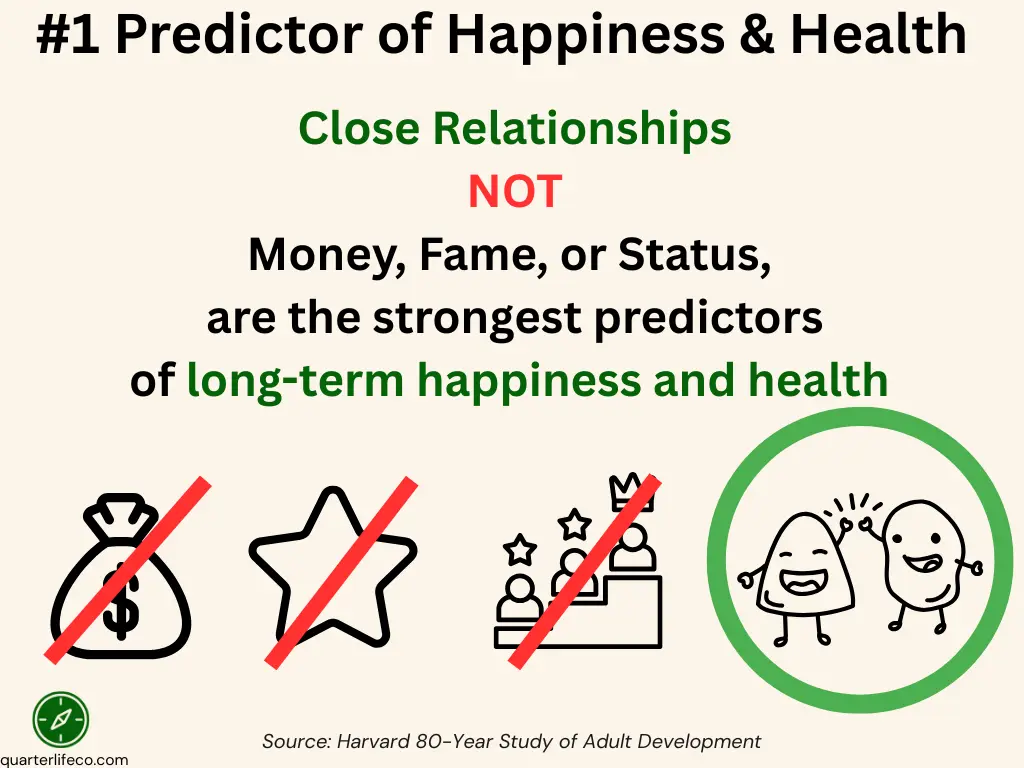
Strong relationships are at the heart of a fulfilling life. Harvard’s 80-year study of Adult Development found that close relationships, not money, fame, or status, are the strongest predictors of long-term happiness and health. But the key isn’t just having a lot of connections, it’s having the right ones and consistently nurturing them.
Don’t Forget Old Friends
One challenge in your 20s is that it’s easy to drift apart from old friends. But you’ll likely look back and wish you had kept those connections alive. Part of investing in relationships means investing in the old ones too. This means putting in the effort to send a quick text, schedule a call, or even visit them in person. A little effort now can keep those bonds strong for decades to come.
Action: Train Your Relationship-Building Skills
Join one new group or community. Something aligned with your values and interests where you’re likely to meet people you click with. Commit to showing weekly for 3 months, and see what connections naturally grow.
Investment #5: Build Something That’s Truly Yours
Building something yourself can give you valuable skills and an asset that pays dividends for the rest of your life. Your 20s are the ideal time to start building something that’s entirely yours. A project like this can teach you about your strengths, weaknesses, and passions.
Entrepreneurial Projects
The goal isn’t just to start a business. It’s to create something that can grow over time and give you leverage later in life like:
- A small online store
- Starting a blog, podcast or social media page
- An app tool or product
Even if it fails, you’ll walk away with real-world skills in marketing, sales, design, and problem-solving, as well as a better understanding of what kind of work you truly love.
Creative Projects
If you’re not entrepreneurial, that’s totally fine. Building something doesn’t have to mean chasing money. It can simply mean creating something from scratch that reflects your creativity and effort like:
- A portfolio of design, writing or coding projects to showcase your skills
- A book or personal writing project
- A collection of original art
- A recipe book or food blog
- A community group or event series you organize
The point is to create something that’s yours. You’ll learn a bunch about yourself during the process. Building something of your own also shows great drive and initiative which is something employers love to see.

Action: Pick one idea that excites you and commit to building it for 90 days.
No overthinking. Just start. It could be an Etsy store, a blog, a book. Even if it’s not clear, it’ll take shape the more you work on it. See where this rocket ship takes you.
Conclusion: The Best Investments Are In Yourself
The best investments in your 20s aren’t just financial, they’re the choices that build your health, sharpen your skills, expand your network, and create experiences and assets that compound for decades. Years from now you’ll remember the marathon you finished, the project you built from scratch, and the trip that changed your perspective.
Pick one action item from this list today and get started. The sooner you begin, the greater the return. The best investment you can make in your 20s is in yourself, and in becoming the version of you that you’ll be proud to live with for the rest of your life.
📈 Summary
- 🏋️ Health is your #1 asset for the rest of your life. Invest in exercise, nutrition, and mental health.
- 📚 High-ROI skills pay dividends. Master 1–2 skills deeply instead of dabbling. These will give you leverage for the rest of your life.
- 🤝 Strong relationships are more important than money, fame, or status and drive long-term happiness. Nurture them.
- 🌍 Solo travel builds adaptability, confidence, and cultural awareness. It’s a major investment in yourself that will change who you are at your core forever.
- 🛠️ Build something of your own. Whether a side business or woodworking. You’ll gain skills, confidence, and a greater awareness of yourself.
Article FAQ
Health is the definitive, most important asset you should be investing in. Without health, you can’t pursue any of the other investments mentioned here. Health forms the foundation for allowing you to do more with your life. Treat it as your most important investment.
First, dabble a bit in different skills to figure out what you truly like and are good at. After a few years of this, really pick 1 or 2 skills that you see a future in, and invest in them fully. The world today rewards specialization, not being a jack of all trades, master of none. Find what you want to specialize in and let that skill take you to the moon.
Unequivocally yes. In my opinion, solo travel is the greatest thing you can do in your 20s. The person you’ll become and the skills you’ll learn can’t be replicated in any other setting. There’s also a myth that solo travel is super expensive. With the right planning, taking advantage of travel credit cards, and visiting places that are more affordable, you can solo travel for less than your daily living expenses back at home.
At our core, humans are social creatures. Deep relationships fulfill us in ways that money can’t. Yes money is important as well, but there are tons of miserable people with a lot of money who don’t have anyone they truly feel close to. That’s a tough, lonely existence. Friendships, like Harvard 80 year study noted, contribute to happiness and health in ways that other material things cannot.
Try to do both. Put a certain amount into retirement but usually you’re not making a ton of money in your 20s. If that $500 gives you a certification that can increase your income, it might be more worth it than the retirement gains you’ll get. Because then you’ll be able to put more money into retirement in the future with your increased income. But also know that you have an incredible asset right now and it’s youth. If money helps you enhance that asset, whether through experiences, travel, or skills, it’ll always be worth it.