Introduction: What It’s Like Moving Out for the First Time in Your 20s
Moving out for the first time in your 20s is a really exciting chapter filled with new experiences, identity formation and increased independence. For the first time, you’re the one calling the shots. Where you eat, where you live, how you spend your money, and if you can eat that chocolate cake for breakfast.
Why It’s Normal to Feel Overwhelmed at First
But with that freedom comes a steep learning curve. There’s so many little things you’ll have to figure out to keep your day running smoothly. I’ve been there and it can be super overwhelming, but once you get the hang of it, you’ll see how empowering and simple new skills can be.
This Quarter Life Co. guide breaks down 10 essential tips for moving out for the first time in your 20s. Lessons I wish I had when I was I left home for the first time at 21.
Tip #1: Create a Monthly Budget for Your First Apartment
Hidden Costs You Don’t Think About at First
When you move out, you realize how many expenses pile up. This is what makes moving out for the first time in your 20s such a culture shock. While rent and groceries are the obvious money suckers, there’s so many unexpected costs that you don’t think about at first. Like internet setup, renter’s insurance, parking fees, kitchen supplies, and can’t forget the toilet paper, that stuff is expensive. That’s why it’s important to set a budget based on how much income you have every month, and stick to it. There’s great apps like Mint, YNAB, or even a simple self-made spreadsheet that can help you see where your money goes each month. Once you know where your money is being allocated, you can decide what’s worth keeping and what you can cut. Budgeting helped me cut out $100 a week on eating out, which allowed me to travel more with the extra cash. Managing your money is one of the greatest adulting skills you can learn, and a core tenet of that is budgeting.
How to Use the 50/30/20 Rule in Your 20s
Budgeting in your 20s when you move out can feel impossible, but with the 50/30/20 rule, it becomes simple. The rule advises to spend 50% of your income on necessities, 30% on wants, and 20% on savings. So if you make $3000 a month after taxes, that breaks down to $1500 for necessities (rent/groceries), $900 for wants (eating out/shopping), and $600 for savings/investing. Check out our guide on how to start investing for retirement for that 20% allocation.
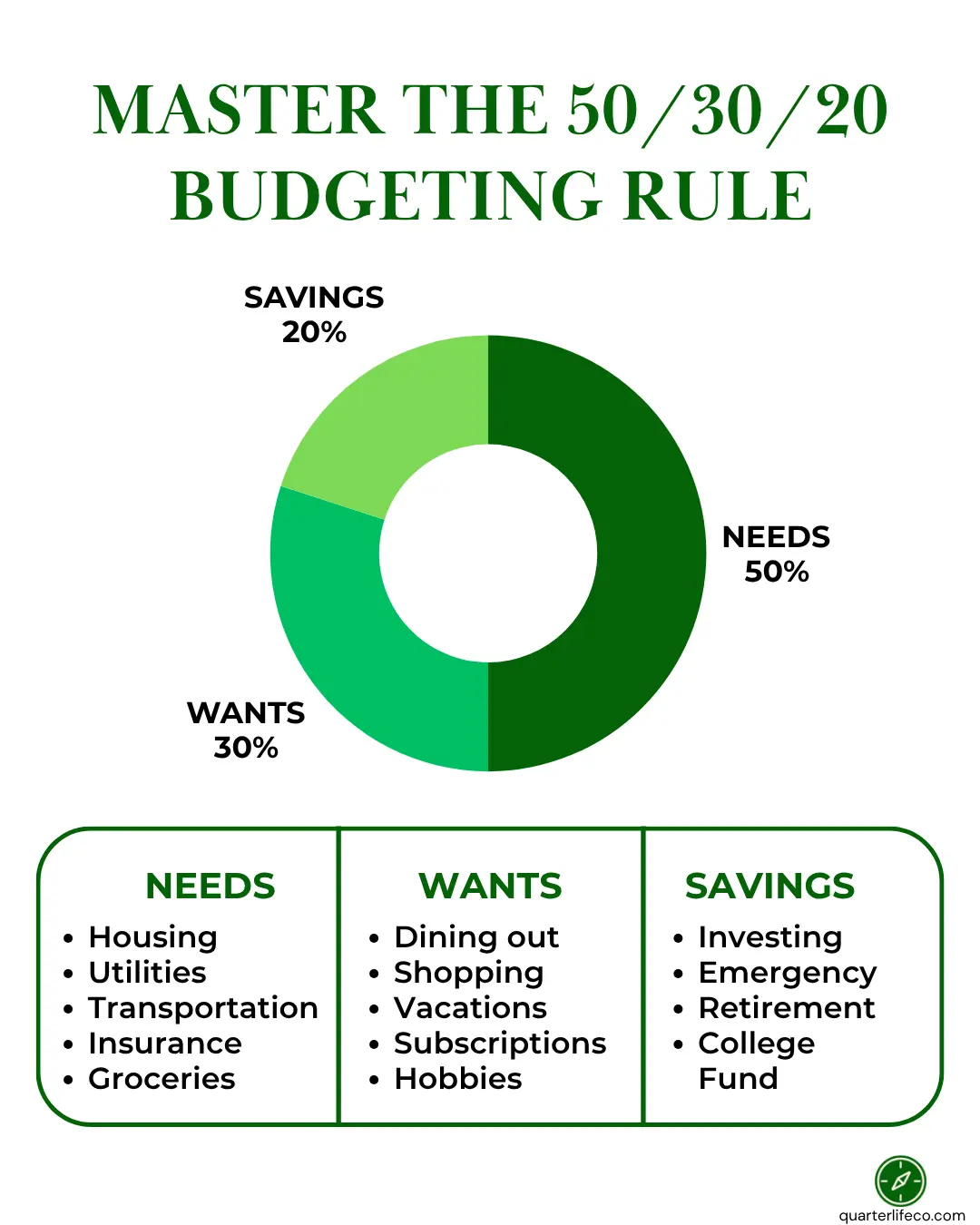
This rule allows you to enjoy life, but still be responsible with your finances. While budgeting has the negative connotation of being a mood killer, sticking to it actually buys you freedom and reduces stress, which is priceless.
Action Step: Set Up Your Budget Spreadsheet Today
Create a budget using a budgeting app or spreadsheet. Enter your after-tax income and use the 50/30/20 rule to calculate how much money you can use per month for each category. Review your spending at the end of the month each month, and adjust accordingly.
Tip #2: Learn Three Cheap and Easy Meals to Cook at Home
Why Cooking at Home Saves More Than You Think
For your health and wallet, learn to cook at least three go-to meals, like a stir fry, pot of chili, or eggs. For when you’re exhausted from a long day at work, being able to whip these up in 20 minutes is invaluable. Better yet, meal prep. Cook a big batch of food once a week and store in the fridge or freezer. That way you can just heat and eat instead of defaulting to takeout.
There’s a common misconception that eating out (especially fast food) is cheaper than cooking at home, but learning cheap meals to cook at home will actually help you save money when moving out. A home-cooked meal can often cost $2-5 per serving while eating out can go north of $20. The difference is even starker if you buy cheap but nutritious staples like beans, healthy grains, eggs and different vegetables.

Affordable Ingredients and Where to Shop
Where you shop plays a big role in the cost too. For example, your dollar will stretch much further at a Walmart, Aldi, or Trader Joe’s than Whole Foods.
Action Step: Master Three Go-To Meals
If you’re not sure what three meals to start with, pick a few of your favorite ingredients, like chicken, spinach, lentils. Plug them into supercook.com and it’ll generate recipes based on those ingredients you like. The perfect start to planning those three go-to meals.
Tip #3: Furnish Your Apartment Slowly (and on a Budget)
Avoiding the ‘Buy Everything at Once’ Trap
When moving out for the first time in your 20s, it’s tempting to go on a shopping spree and buy all the “essentials” at once. But it’s important to be patient when furnishing your apartment. Definitely buy true first apartment essentials like bedding, plates and towels, but hold off on the nice-to-haves like the wall art, rugs, or lava lamp until you’ve really settled in and thought of what vibes you want your place to have. Give it a couple of weeks and see what you actually need. Personally, there’s some purchases I regretted when moving into my first place. I was so excited to make it cozy and stylish but in the eagerness I ended up buying an expensive painting and rug that didn’t match at all. I really should have thought more about what I wanted my place to look like.
Best Places to Find Cheap Furniture (IKEA & Marketplace)
When it comes to furniture, there’s two great options for when you’re on a budget. This makes moving out for the first time in your 20s less expensive.
- IKEA: A classic choice. That $25 table might not be the highest quality, but it’s affordable and perfect for your 20s, especially cause in our 20s we usually don’t stay in the same apartment for long. Save the investment pieces for your long-term home.
- Secondhand (Craigslist, Facebook Marketplace): These sites are a goldmine for deals. Most sellers here just want to get rid of their furniture, so you can get great items for cheap, since you’re actually doing them a favor taking it off their hands. And when it’s time to move again, you can easily resell it since you’re not desperate to recoup your initial investment, since it was so low in the first place.

Action Step: Wait One Week Before Big Purchases
For any item over $100, wait one week before buying it. If you still want it and it’ll match what you’re trying to do with your place, go for it. If not, you just saved yourself from a purchase you would’ve regretted.
Tip #4: Keep Track Of Recurring Bills When You Live Alone
The Expenses That Sneak Up on You
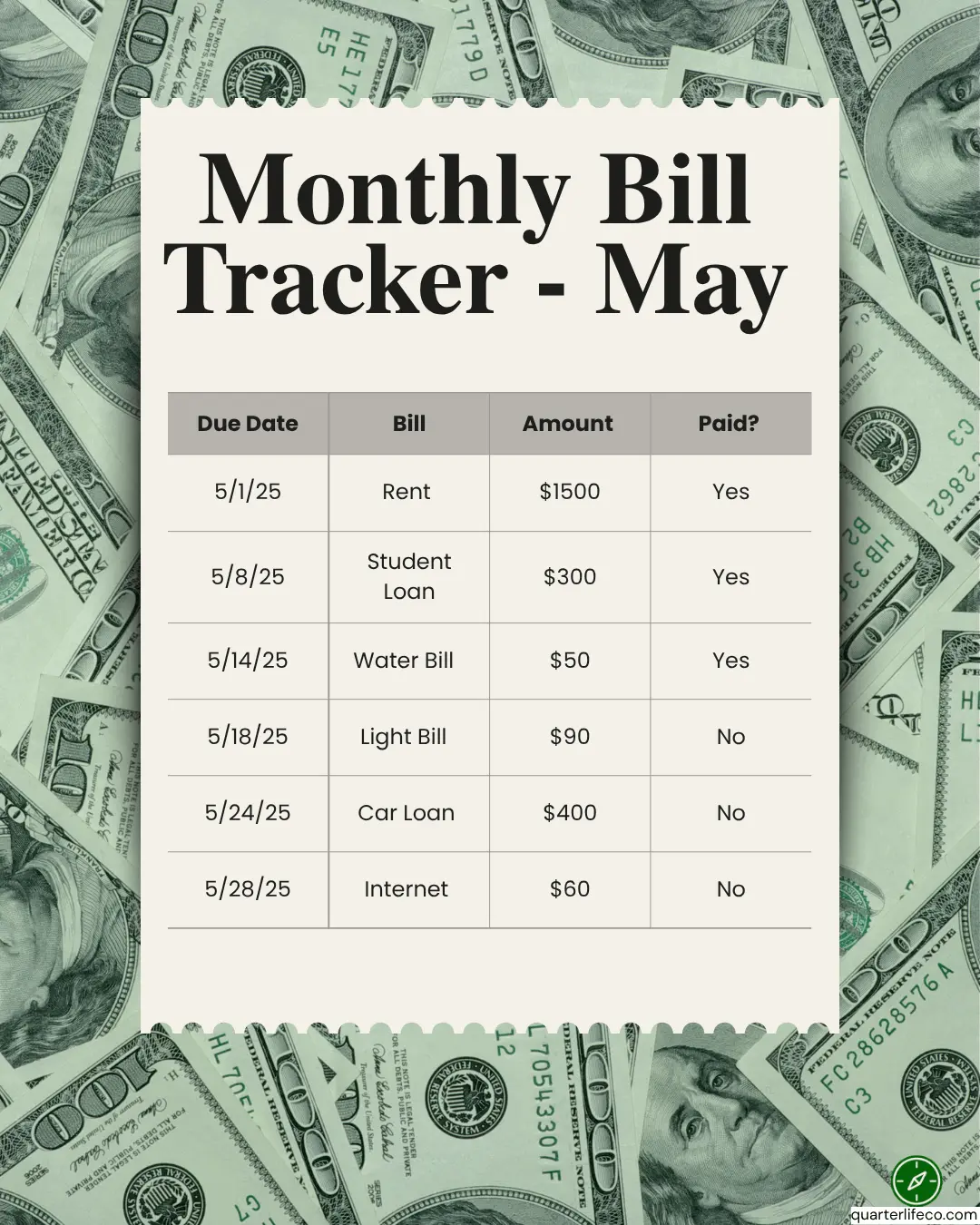
Now that you’re living on your own for the first time, you’ll have to manage all the recurring bills. This spans all the way from rent, Wi-Fi, HOA fees, to even your Netflix subscription. Tracking these recurring expenses is key to avoiding late fees and interest payments. It also allows you to budget effectively since you can cut some items you don’t really use. Check out our article on discounts you can take advantage of in your 20s to lower your costs. These include gym memberships and entertainment subscriptions.
How to Stay Under the 30% Rent Rule
The biggest recurring expense is usually rent. It’s recommended to budget no more than 30% of your gross (pre-tax) income towards rent and utilities each month. This keeps your budget flexible and allows you to not constantly be stressed about money. Of course, with today’s housing market, hitting that 30% mark can be tough. Still, try to aim for this goal as much as possible, even if it includes living with roommates or getting a smaller place.
Why Setting Up Autopay Helps Build Credit
To make managing all these bills even easier, set up autopay for recurring payments like your credit card, car loan or othering recurring monthly expenses. This helps you build credit which matters a lot in your 20s for renting apartments, buying a car and getting loans with favorable interest rates. Check out our article on how to build your credit in your 20s for more info.
Action Step: List and Automate Your Recurring Payments
In a spreadsheet, list every recurring expense you have along with its due date. Next, set up autopay for as many of the bills as you can. For the rest, set reminders in your phone to pay them before the due date. This makes moving out for the first time in your 20s more manageable and less stressful.
Tip #5: Learn Basic Life Skills for Living on Your Own
The ‘Adulting Shock’ When You Move Out
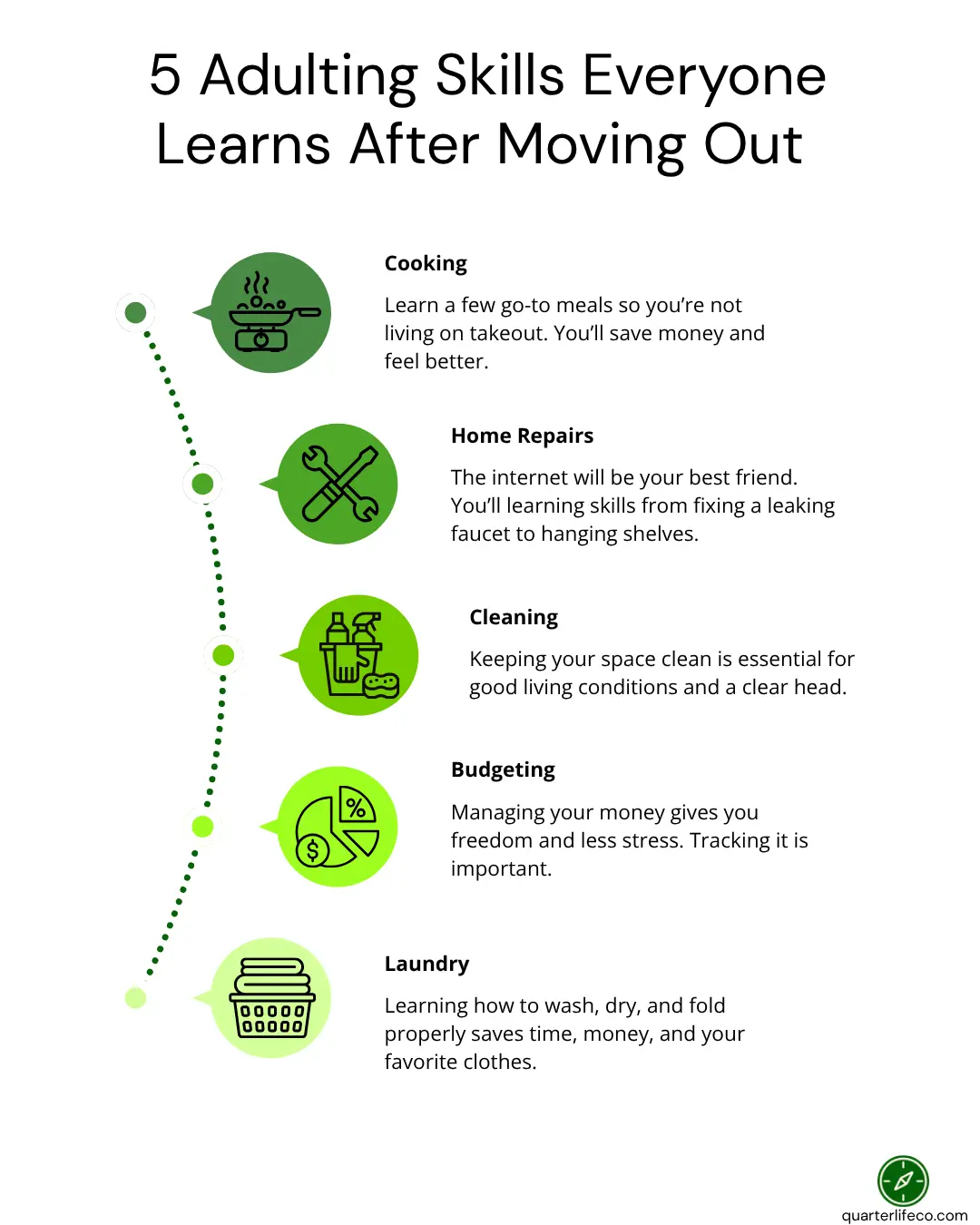
It’s a wake up call when you’re moving out for the first time in your 20s and realize just how many adulting skills you need to figure out quickly. Cooking, laundry, cleaning, home repairs. These are important life skills for your 20s. It gets super overwhelming which is totally understandable, so don’t feel bad or like you’ll never be able to do this. Nobody moves out knowing everything.
The Power of Learning One Skill at a Time
While these skills seem intimidating, they’re actually much easier to learn than they look. For almost anything, whether it’s how to write a check for rent or fixing a clogged sing, there’s a 5 minute YouTube video or TikTok reel that explains the process. The first time you try to unclog that drain it will be intimidating, but it gets easier fast. At it’s core, adulting is just learning all these small skills one at a time, until you can go on autopilot while you do them.
Action Step: Pick One Skill to Learn This Week
Think of one small skill you want to learn. Like how to cook eggs or how to fold laundry properly. Watch a YouTube tutorial online then practice it on your own. Pretty soon, you’ll be able to make your own YouTube video about it.
Tip #6: Build an Emergency Fund in Your 20s
Why an Emergency Fund Is Crucial When You’re Independent
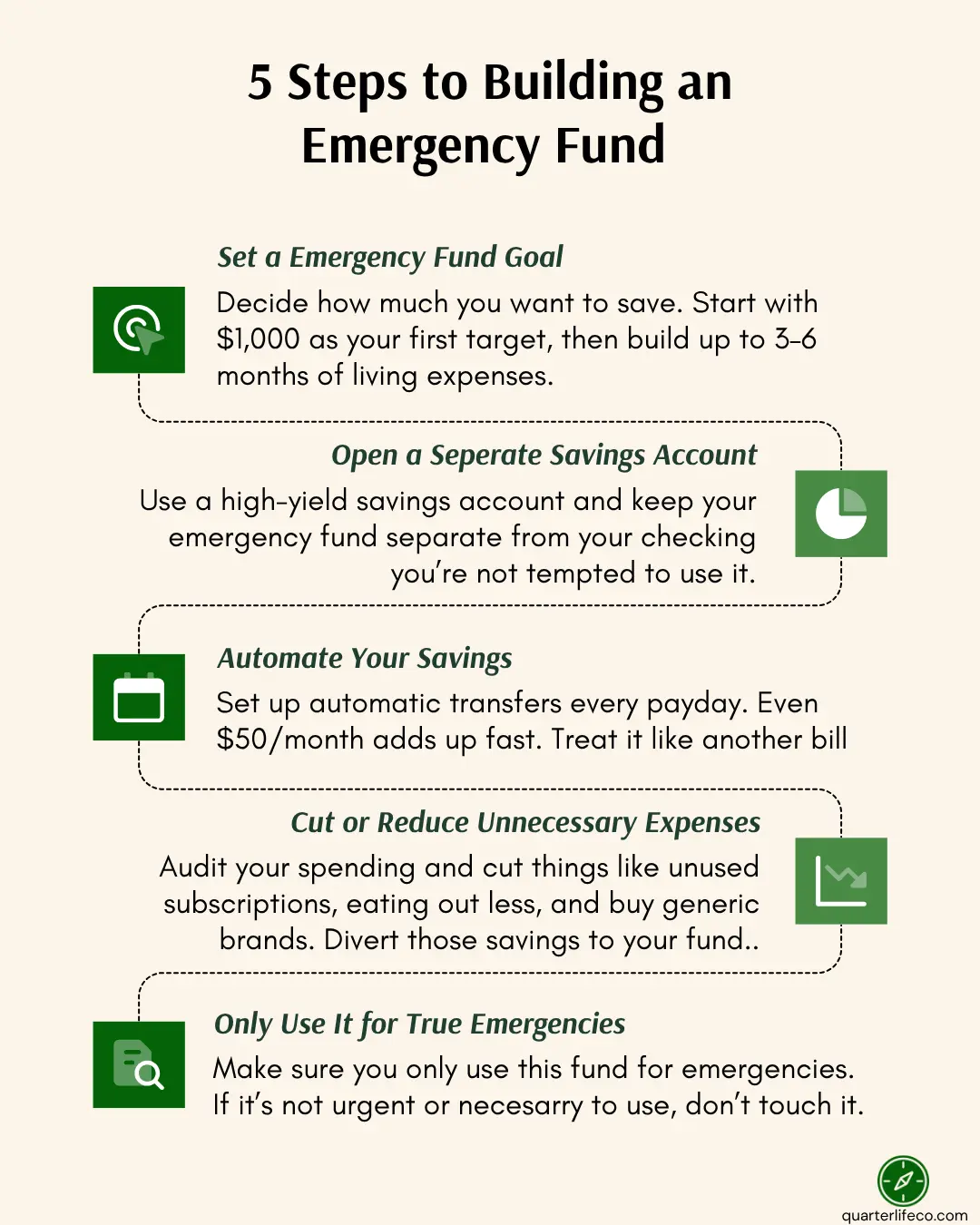
Life has a weird way of throwing curveballs at you. A flat tire, medical bill, or even a job loss can flip your finances overnight. But the best way to protect yourself from that stress and hardship is to build an emergency fund. Building an emergency fund in your 20s is one of the smartest financial tips for your first apartment.
In your 20s, this doesn’t have to be massive. Since you’re probably only supporting yourself, aim to save at least 3 months of living expenses. This goes a long way in giving you breathing room if something big happens.
The Confidence That Comes From a Safety Net
It’s also a mental thing. Having this nest egg is protection from the future “what ifs” and doom thinking that plague our 20s. It helps you relax more. Back in my tech sales job, my company laid off half our employees and wasn’t doing too well financially. I was worried that I possibly wouldn’t have a job as well in a couple of months. But having my 3 month emergency fund gave me assurance. If I lose this job, I had 3 months to find a new one. That drastically lowered my stress and made me go from doom thinking to “I’ll figure it out” thinking. The emergency fund was like a warm blanket as the fate of my job was in turbulence. That’s a priceless thing to have.
Action Step: Build Your Emergency Fund
For the next 12 months, set up an automatic transfer of at least $200 a month in a separate savings account. By the end of the year, you’ll have $2,400 saved which is a great start to your emergency fund. It’ll also build the muscle of saving.
Tip #7: Learn Basic Cleaning and Set a Cleaning Schedule
How a Clean Space Impacts Your Mental Health
Keeping your place clean isn’t just for the aesthetics. A tidy home directly affects your health, stress levels, and even your relationships your roommates. Some leases even have clauses that require the unit to be cleaned regularly. Foregoing this could cost you your security deposit.
Cleaning Routines for Each Room (Kitchen, Bath, Bedroom)
Let’s outline cleanings tips for your first apartment:
- Kitchen: Wipe down counters weekly, wash dishes/load the dishwasher, take out trash if full.
- Bathroom: Scrub the toilet, sink, and shower once a week to avoid the grime build-up.
- Bedroom/Living Room: Dust and vacuum, weekly, and mop every couple of weeks.
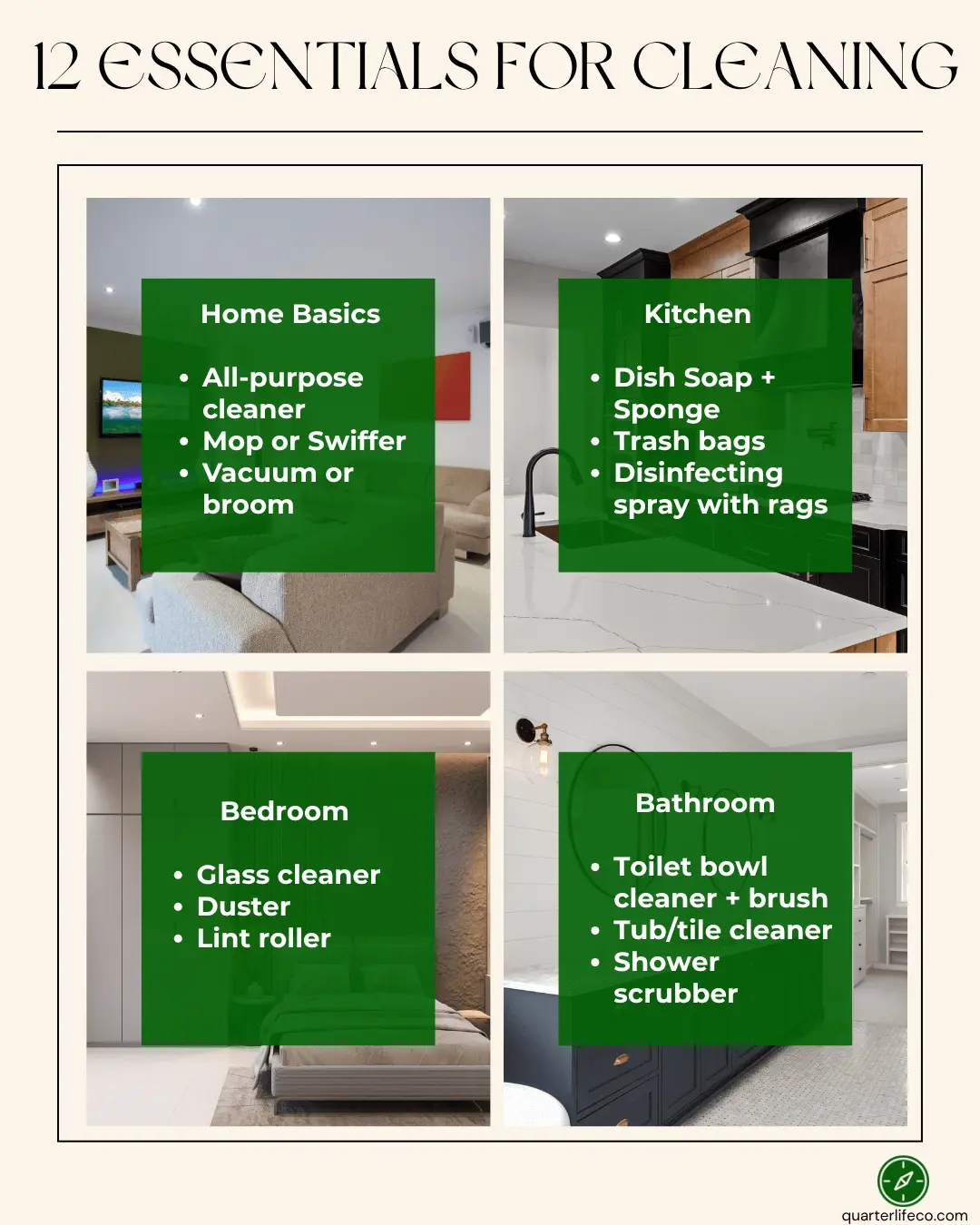
This might sound like a lot, but if you do a little every week, it’s totally manageable. YouTube is full of quick tutorials that make learning these processes even easier and faster.
Tips for Cleaning To Not Be Overwhelming
Moving out for the first time in your 20s probably means you’re experiencing living with roommates for the first time too. If so, you can divide chore responsibilities or even split the cost of a professional cleaner once a month. Sometimes the $50 a month is worth the time saved.
One of the golden rules of cleaning is to not let the mess pile up. If you do that’s when it gets overwhelming to clean. Like if you spill something, clean it right away. These small daily habits make the weekly cleanings much less stressful.
Action Step: Create Your Weekly Cleaning Schedule
Create a weekly cleaning schedule. For example, vacuum on Mondays, clean the bathroom on Sundays. If you divide the tasks into a set schedule, it’ll be much easier to follow and less overwhelming. And once you get going, you’ll see how quick most chores actually are.
Tip #8: Read the Lease Carefully and Document Everything
Key Lease Terms to Understand Before Signing
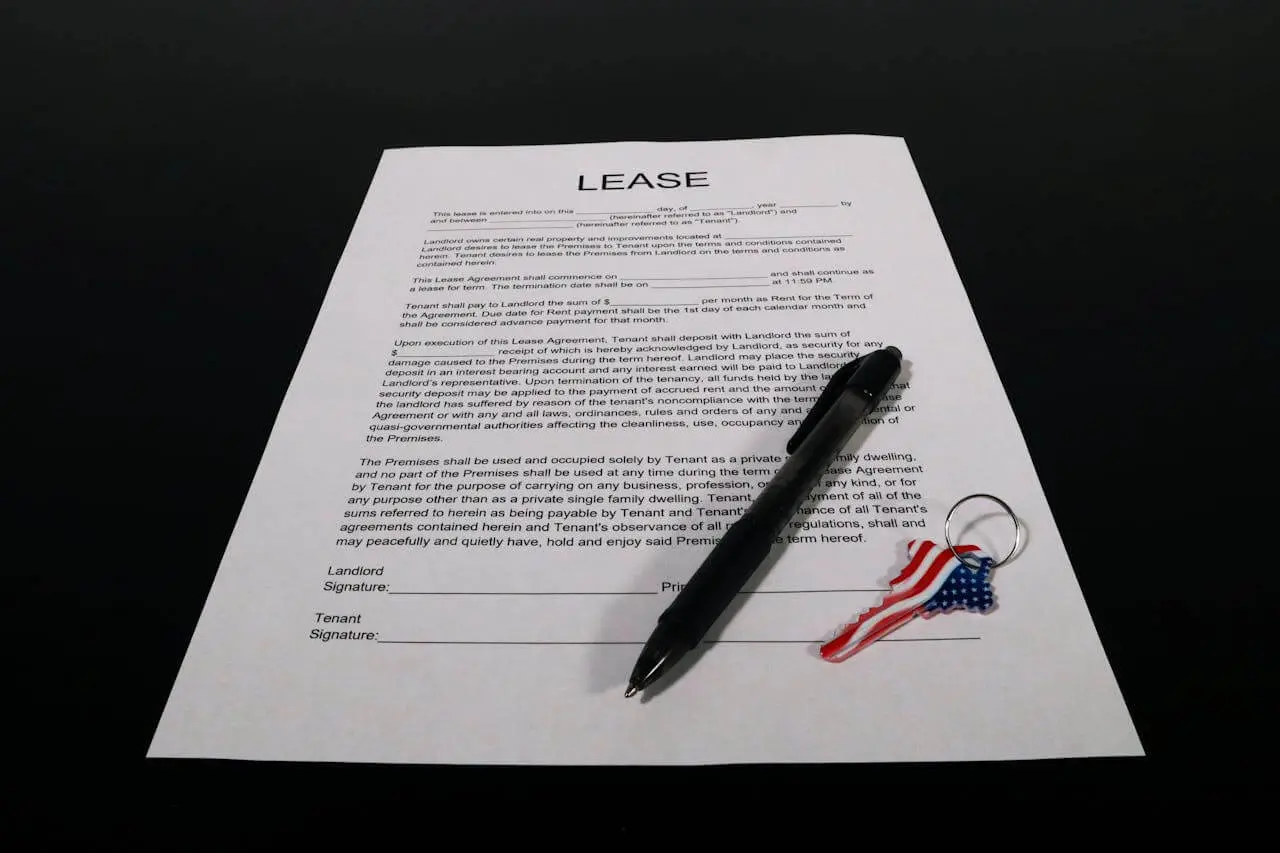
When you rent a place, you’ll be asked to sign a lease. It’s important to read it carefully as it has key details like:
- Rent amount and due date
- Lease duration
- Who’s responsible for repairs and utilities
- Security deposit rules
- Pet polices
Sometimes you’ll even find hidden clauses (like being responsible for lawn care). If you’re not okay with certain parts of the lease, you can try and negotiate it before signing.
Why Documenting Everything Protects You Financially
Just as important is to document the condition of the unit before moving in. Take photos of cracks, stains, broken fixtures, and send them to your landlord. This protects you from being held responsible for the damages you didn’t cause and when you move out, you’ll be able to get more of your security deposit back.
Action Step: Take Photos and Save Proof of Your Apartment’s Condition
Read your lease carefully and highlight any parts you don’t like. Once signed and you move in, do a photo walkthrough and take thorough pictures of the unit.
Tip #9: Apartment Safety Essentials You Must Have
Smoke and CO Detectors: Why They Matter
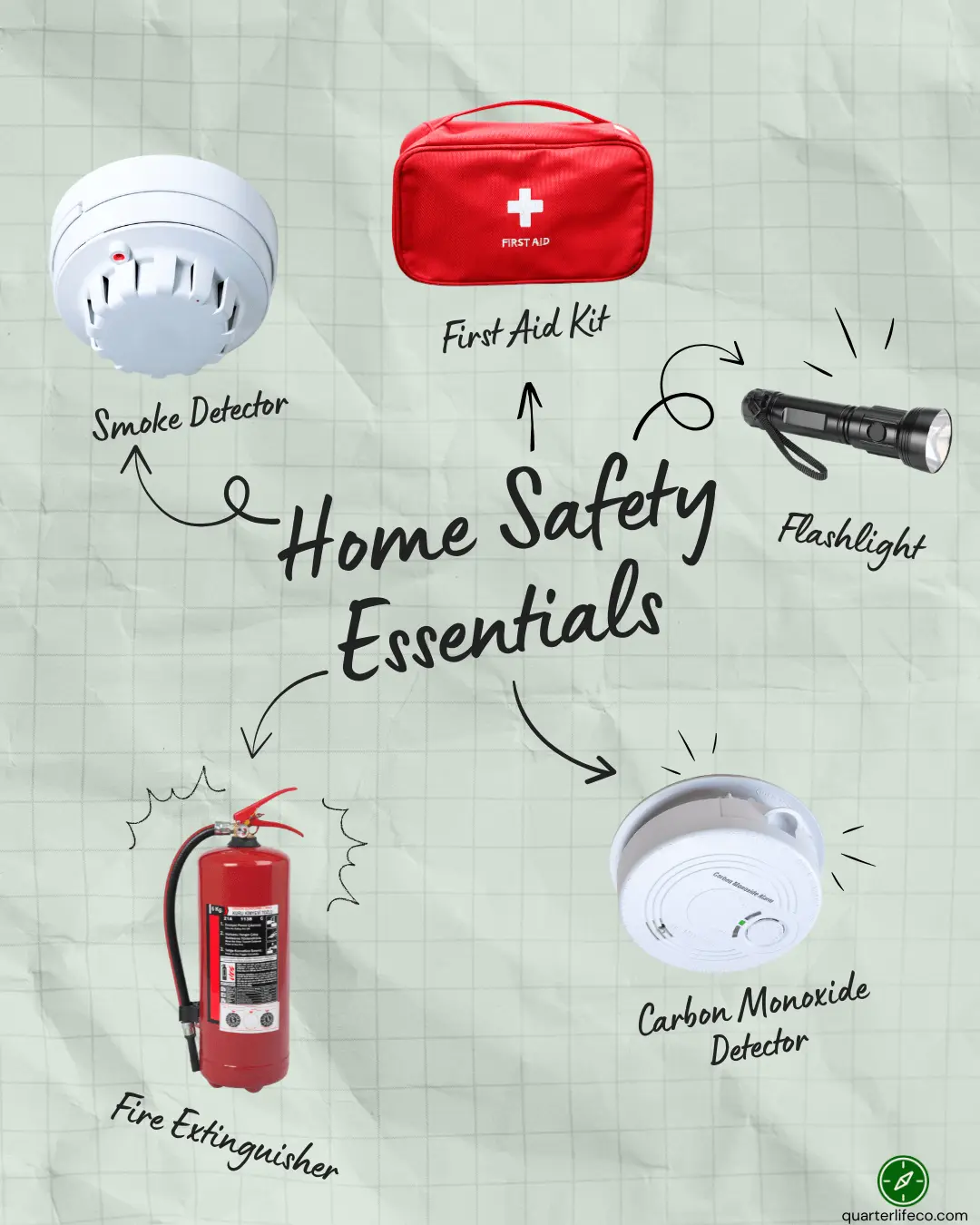
It’s important to be aware of safety when moving out for the first time in your 20s. According to the U.S. Fire Administration, there were 344,600 US residential fires in 2023. This equates to a fire every 92 seconds! That’s why it’s important to have smoke detectors installed, as well as a fire extinguisher available in your unit.
The most common type of fire in a residential unit is a cooking fire, which usually can’t be put out by water. This makes a fire extinguisher extremely valuable.
While a rarer problem, a carbon monoxide detector is also important to install. Carbon monoxide can come from different sources such as gas stoves, auto exhaust, or leaking chimneys. Common symptoms of CO poisoning include headache, dizziness, nausea, and confusion. CO is especially dangerous because it’s odorless, so having the detectors is a must.
Action Step: Have These 5 Safety Items
Confirm that your unit has working smoke detectors. Your landlord is usually required to provide them. Also add a carbon monoxide detector. Then add a fire extinguisher to your kitchen. Lastly, get a first aid kit and flashlight for emergencies. Buy these five things and your home will be much safer.
Tip #10: Expect to Feel Overwhelmed, But Know It Passes
The Emotional Rollercoaster of Moving Out
Last point and I really wish I knew this going in. Moving out for the first time in your 20s can be frustrating, overwhelming, and lonely. There’s a lot of work and stress from moving, trying to get your life situated in your new home. A transitory period like this, especially in your 20s, can feel like a mini life crisis. But it’s important to know over time, this feeling will fade as your life normalizes.
If you really want to destress the process, considering hiring a moving company. If not though, ask some friends or even do it on your own. Be patient with your place coming together and in a couple of months, you’ll get in your routine and it’ll go smoothly.
How to Cope With Homesickness and Loneliness
For me, homesickness was a huge thing. You’re so used to living with your family these 18+ years, it’s a culture shock when you’re now on your own. Give yourself patience as you navigate this new period of your life and I promise you’ll come out the other side stronger, more independent, and more self-aware in the process.
Action Step: Call a Friend or Family Member During the First Month
Action: The first months when you’re extremely lonely and overwhelmed, lean on old friends and family. Give them a call. It’s reassuring and helps ease the burden of being on your own when you can connect with people you care about.
Conclusion
Why This Stage of Life Is So Valuable
Congratulations! You’re moving out for the first time in your 20s. It’s a crazy period of your life filled with newfound independence and extreme self growth. The essential tips of moving out for the first time in this guide help soften the landing and help you build a strong foundation of independence.
Adulting Is a Journey, Not a Race
Remember, you don’t need to rush the process of adulting. Over time and out of necessity, you’ll learn a ton of these adulting skills and they’ll soon become second nature to you.
So give yourself patience and know that this stage of life is one of the most valuable growth periods you’ll go through. Enjoy the journey, we’re excited for the growth you’re going to experience through it!
📦 Summary
- 💰 Budget: Learn where every dollar goes. Freedom starts with knowing your numbers.
- 🍳 Cook: Master three simple meals. Your wallet and health will thank you.
- 🪑 Furnish Slowly: Build your space over time. Don’t rush to buy expensive pieces until you know for sure you want it.
- 💳 Track Bills: Autopay lessens the stress of adult finances.
- 🧺 Learn Adulting Skills: Laundry, cleaning, repairs, cooking. These skills will catapult your independence and confidence.
- 🏦 Emergency Fund: Savings buys peace of mind that is invaluable, and when an emergency happens, you’re ready.
- 🧼 Clean Regularly: A tidy home clears your head too.
- 📝 Read the Lease: Know the fine print before you sign anything. This can bite you in the butt if you don’t.
- 🔥 Stay Safe: Smoke detectors, CO alarms, and a fire extinguisher are the essentials for home safety.
- ❤️ Be Patient: Feeling lost or homesick is normal. It fades. But the growth you’ll experience living on your own has outsized impact.
Article FAQ
A good rule of thumb is to save at least three months of rent and expenses. That includes your security deposit, first month’s rent, utilities, groceries, and an emergency cushion.
Besides rent, you can expect expenses like utilities, Wi-Fi, furniture, kitchen basics, cleaning supplies, and rent deposit. That’s why having extra money set aside is important so you can eat these costs.
While a personal decision, we believe you should live with roommates in your 20s. Moving out for the first time can be lonely and overwhelming, but having roommates helps as a support system. Also you’ll split costs, meet new people, and be able to ease into independence.
When you move out, your relationships change, with friends and family especially. You don’t see them as often, especially if you’re moving to a new city. So the big regret is not enjoying those last few months with family and friends before the big move.
Waiting for the perfect time to move out is a mistake. It’s amazing how quickly humans adapt to situations. Once you move out, gain independence, grow as a person, you’ll ease into living on your own and it’ll become second nature to you. But you have to take the leap first.
Start with function over decoration. Things like bedding, kitchen supplies, cleaning supplies, and lighting. Decor can come later once you have a feel for the type of place you want. You don’t need to rush into buying that stuff quite yet.