Introduction
Dating in your 20s is chaos. Some people are looking for a hookup, some are looking for a spouse, and some are just swiping cause they’re bored. Because of the overwhelming number of options, combined with the fact you’re still figuring out what you want, dating can be tough in your 20s. In this guide, we’ll share 7 things no one tells you about dating in your 20s, so you can move through your dating life with confidence.
Most Relationships in Your 20s Won’t Last
20s Are The Decade of Change
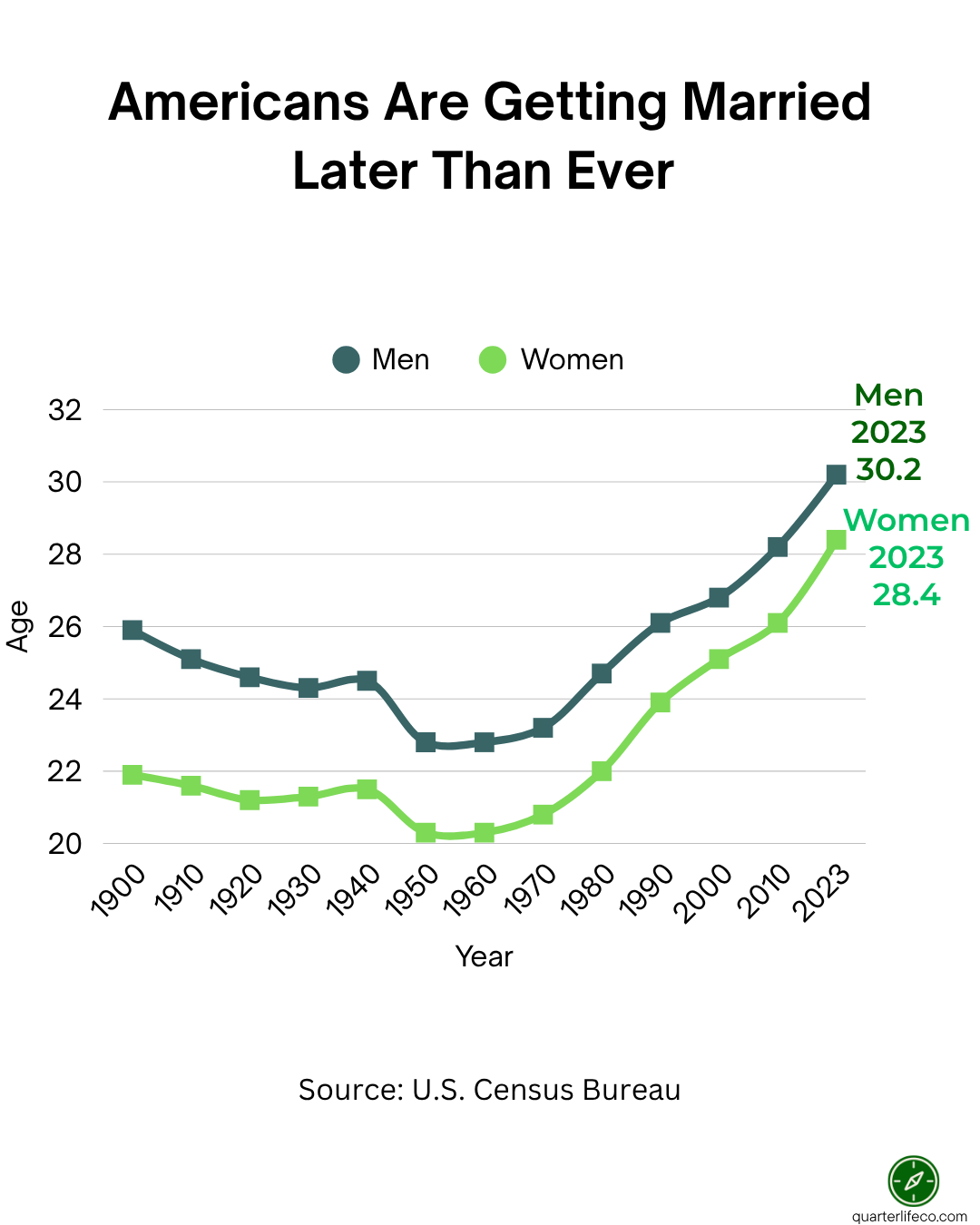
The 20s are a transitional decade. During this period, people move cities, start careers, outgrow friends, and explore who they truly are. Because of this, most relationships don’t last. Statistically, the average person doesn’t marry until their late 20s, early 30s. 28 for women and 30 for men etc be precise, according to got the U.S. Census Bureau.
You Won’t Click With Most People
Here’s a phenomenon that took me a while to understand in my 20s. I used to expect to click with everyone I went on a date with and when I didn’t, I thought it must’ve been a problem with me. That I wasn’t interesting enough, attractive enough, or maybe I had a booger in my nose the whole date.
But over time, I realized that the bar for two people to click romantically in a serious way is actually very high. And even with dates I didn’t like that much I still took it personally when I was rejected. So the point is, most dates won’t go anywhere. It’s easy to take that personally. To assume something is wrong with you. But in reality, that’s just how dating works. Once you accept this, you take off a lot of the pressure from dating. Rejection starts to not affect your confidence, because you’re not just trying to get them to like you, you’re seeing if you like them as well. After all, dating at its core is a two-way street.
Chemistry vs Compatibility
Now sometimes you’ll meet someone and it’ll feel electric. The kind of connection that makes the rest of the world blur. That feeling where your heart races and you feel like nothing else in the world matters. And I hope everyone experiences the strength of this feeling at some point in their life. But even then, it might not last. Because love isn’t just about chemistry, it’s about compatibility. You can have an incredible connection with someone and still want different things. Maybe one person wants stability and the other wants to travel the world. That non-compatibility can cause even the strongest of chemistry connections to break.
“Failed” Relationships Don’t Exist In Your 20s
Most relationships in your 20s will “fail.” I wrote that in quotes because it’s not really failure. Every situationship, date, short-lived connection teaches you lessons that shape your dating instincts. At 22, I had no clue what kind of person fit me. But at 26, I can tell within a few conversations if there’s real compatibility with someone or not. This saves tons of time, energy, and heartache, but only because I went through the trials and tribulations of dating in my early 20s.
Dating Apps Are a Tool Not a Lifestyle
The Power of Dating Apps
Dating apps have truly revolutionized dating. According to SSRS research, about 65% of U.S. adult aged 18-29 have used a dating app. This means half of your potential dating pool is likely online. So firstly, you’re not desperate for using dating apps. You’re actually smart for using one of the most powerful resources ever invented for dating.
The Downsides of Dating Apps
But of course there are catches with dating apps. Burnout, ghosting, and low-effort communication are so common. When you first get into the dating app scene, you sometimes internalize it as a personal failure. But masking anyone behind an internet persona is going to increase the instances of these low effort and sometimes rude occurences of communication that plague the dating apps. But frankly, this person is a stranger to you. They don’t owe you anything and you don’t owe them anything either.
Let’s talk about the biggest pitfall that dating apps have caused in modern dating. This phenomenon is choice overload. This is famously displayed in the jam experiment. In this study, a display of 24 jams attracted more tasters but only 3% bought a jar whereas a display with 6 jams attracted fewer tasters but 30% made a purchase. This study is the perfect analogy for the modern dating scene. Choosing between hundreds of profiles and the endless variety that comes with it creates decision paralysis and dissatisfaction, since people are always wondering is there anything “better” out there.
The Good of Dating Apps
With that being said, dating apps aren’t all bad. They’re amazing tools if you use them correctly. They especially help when you’ve just moved to a new city, have a busy schedule, or want to meet people outside of your social circle. Also, dating apps are a great way to find out what you do and don’t like in a partner, in a low stakes way. After all these are literal strangers you’re meeting.
Unlike the old days where your grandparents only met people who lived down the street, you and your potential matches are exposed to hundreds of different profiles everyday. Likely more options in a day than your grandparents saw during their dating lifetime. It’s a blessing to be able to meet so many different people when dating, but it can be a curse as well.
How to Use Dating Apps Effectively
So how to use online dating effectively?
- Treat it like a tool not your entire dating strategy.
- Move conversations offline quickly and just meet in person. Real chemistry is hard to know over text.
- Don’t overuse them. Swipe for your 15 minutes a day and live your life.
- Focus on quality over quantity. A lot of matches might be good for the ego, but one real connection is good for the heart (corny I know haha)
Don’t Forget Real Life Dating
Last thing! A lot of people dating in their 20s ONLY use dating apps. There’s still so many other traditional methods of dating that get overlooked in this modern dating scene. Like meeting through a hobby, through mutual friends, at a party, or god forbid, you see a cute stranger and ask them out. Your competition in the real world is much less than on the dating apps now.
Time Is Everything in Your 20s
Emerging Adulthood
Your 20s are a decade of massive personal evolution, known as emerging adulthood. In this stage you go through the big transitions of adulthood where you’re forming your identity, exploring careers and learning about the life you want to live. And your brain is in its final stages of development (yes the infamous prefrontal cortex). Every new experience, like a job, move, or relationship, becomes a shift in your identity.

As You Shift, Relationships Shift
These shifts actually change the kind of partners and relationship dynamic you’ll want in the future. Maybe at 23 you swore you’d live in a big city forever but by 28 that suburb with the two AppleBees starts to look kind of nice. Suddenly, that person who loved nightlife and the big city scene doesn’t quite align with where you’re headed. As you move through your 20s, you’ll be surprised how quickly you outgrow people simply because you’ve both become newer versions of yourselves. And those newer versions of yourself happen a lot in your 20s.
Timing Is Just as Important as Compatibility
Timing matters just as much as compatibility and especially in your early and mid 20s, timing is tough. You might meet the perfect person for you at 23, but since you’re still figuring out who you are and what you want, it may be difficult to commit. Unfortunately, the right person at the wrong time still equals the wrong relationship.
Don’t Marry Young
Because of what’s been shared in this section, here’s a controversial truth. Getting married too young stacks the odds of success against you. Research from the Institute for Family Studies found that people who marry after the age of 28 have significantly lower divorce rates. This isn’t because love is weaker at a younger age. It’s because by your late 20s, your sense of self is much stronger. You know yourself, your values, your priorities and what kind of partnership you want. That in turn makes choosing the right person and being with them a lot easier.
That doesn’t mean if you meet someone perfect for you in your early 20s you shouldn’t commit. But commitment doesn’t have to mean marriage. It can mean dating until the 2nd half of your 20s and then deciding if getting married is the right choice.
The Four Horsemen of Dating
Dating in Your 20s Can Suck
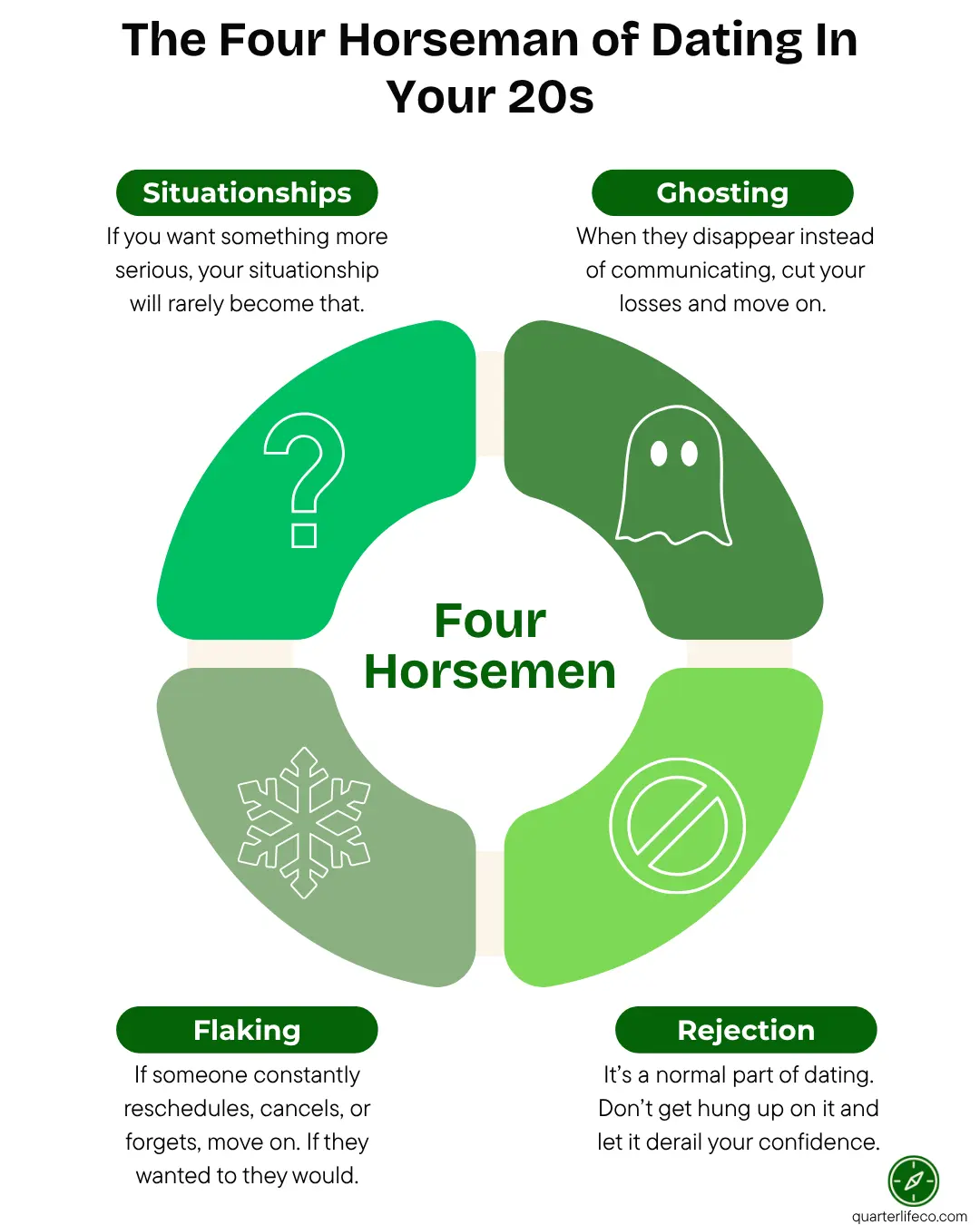
Dating in your 20s can hurt. Between the ghosting, flakiness, situationships, and rejection, it constantly feels like you’re battling day after day in a war zone of uncertainty. But understand that all of this is so normal.
Dating apps and social media have made people more disposable. When so much of dating happens behind a screen, there’s lower accountability and pleasentries fade. Take two instances. You went on a date with a stranger from an app and decide you’re not interested. Ghosting is easy since there’s no social consequence. But if that same person were a friend-of-a-friend, you’d probably explain you’re not interested, since the social consequence is higher. So remember this comparison next time you get an ego blow from getting ghosted off a dating app.
Horseman 1: Situationships
Let’s talk situationships. Many 20-somethings are still figuring out who they are. But as humans we all crave connection, especially romantic connection. That’s where situationships come in. It’s a way to get connection without the commitment.
If you’re struggling in this type of relationship here’s something you need to hear. If someone only wants a situationship, it’s extremely difficult to change their mind. Maybe they’re focused on their career, on themselves, or just not ready to give what a real relationship requires. If you’re wanting it to be something more, it’s better to just cut your losses than waste your time.
But situationships can also be great! If you’re the person still trying to figure out yourself, situationships are like a test and practice for when you do meet someone you click with. Just make sure the other party is cool with it being a situationship as well 🙂
Horseman 2: Ghosting
Next let’s talk ghosting. This is a rite of passage in your 20s. Yes it sucks, but over time you start to not let it faze you at all, if you understand why it happens, which we’re about to share here.
If you’ve never ghosted anyone, here’s the internal monologue of some who does:
You: “Hey, wanna hang out again this week? That new movie with Channing Tatum we talked about just came out.”
Them: (thinking): “I wasn’t really feeling it, but I don’t want to text a whole rejection. That seems excessive since we only had one date and I met him on Tinder. If I just don’t respond, they’ll take the hint.”
A few days later with no response, you start spiraling:
“Maybe they forgot to reply. Maybe their phone broke. Maybe there was a zombie apocalypse but only in their neighborhood.”
Then you text again and still nothing.
The reality is they weren’t feeling it and they’re well within their right to not want to go on another date. For most people, it’s easier for them to disappear than explain. And frankly, I don’t blame them.
If you’re a stranger to them and only went on a couple of dates, they don’t owe you an explanation. Ghosting feels rude, but learning to read it correctly solves everything. It’s not some mystery. It means “no.” In your 20s you’re going to be ghosted a lot, might as well understand this early to save yourself from wasted effort and time.
Trying to undo a ghost or get closure from one is a waste of energy. When I got ghosted early in my 20s, I overanalyzed it a ton. But at the end of the day, there could be a ton of different reasons why they ghosted. But they all converge to a “no,” the other party isn’t interested.
Horseman 3: Flakiness
Flakiness is the prequel to ghosting. It’s the in-between stage when someone starts making excuses instead of being direct. Their car broke. Their dog ate their homework so they have to redo the report. They have to take their sick orangutan to a specialist veterinarian in a city 2 hours away. You get the idea.
Here’s the exact playbook to know if a flake is genuine or a soft ghost.
- If they cancel and only give an excuse: Not interested
- If they cancel but immediately suggest another time: Still interested
Boom, solved that for you.
Most people overanalyze this but it’s really this simple. If someone truly wants to see you, they’ll find a way to do it. If not, accept the excuse and move on. So many people cling onto hope in their 20s for people they’re dating, but if you’re confused whether they like you, they probably don’t.
Horseman 4: Rejection
This leads into rejection. Rejection is not a personal failure. Everyone gets rejected, even the most attractive, confident, seemingly “perfect” people. With dating in your 20s, you need to stop tying rejection to your worth. Rejection is the game of life. Jobs, opportunities, and yes, relationships.
When rejected, you have two choices.
- You can spiral, take it personally, and make dating even harder for yourself just from your vibes.
- Or you can accept it, shake it off, and keep showing up in the dating market.
The first group ends up bitter. They blame their dating struggles on their looks or that the standards are too high. No. You just stopped trying and your bitterness is a toxic fume in every bar you walk into.
You’ll Learn More About Yourself Through Dating Than About the People You Date
No Such Thing as a Wasted Date
There’s no such thing as a wasted dated in your 20s. Every date, every new connection, every heartbreak tells you about yourself and what you want in a partner.
Dating Is Practice for the Most Important Decision of Your Life
We spend years upon years in school for a future career. But the single most important decision you’ll ever make in your life is not your career. It’s who you marry.
Dating is literally giving you the skills of picking the right person to marry. Every single person you date gives you a greater glimpse into the type of life partner you want. This is why I’m a huge proponent of dating around in your 20s, especially early and mid 20s. It’s not about collecting partners, it’s about collecting perspective. You’ll find a greater appreciation for what qualities you want in a partner, and you’ll become a better potential partner in the process.
Dating Is Self-Discovery in Disguise
In your 20s you’re still forming your identity, and dating gives you reference points for what matters to you. Whether it be emotional availability, communication, ambition, kindness, etc. You don’t truly know what you value until you’ve seen the opposite in the people you date.
Lastly, the more self aware you become, the better your relationships get. You’ll make tons of mistakes in early relationships. Maybe you were just a total douchbag to your last girlfriend or boyfriend. But that learning experience will carry you forward, and you’ll likely be a better partner in your next relationship.
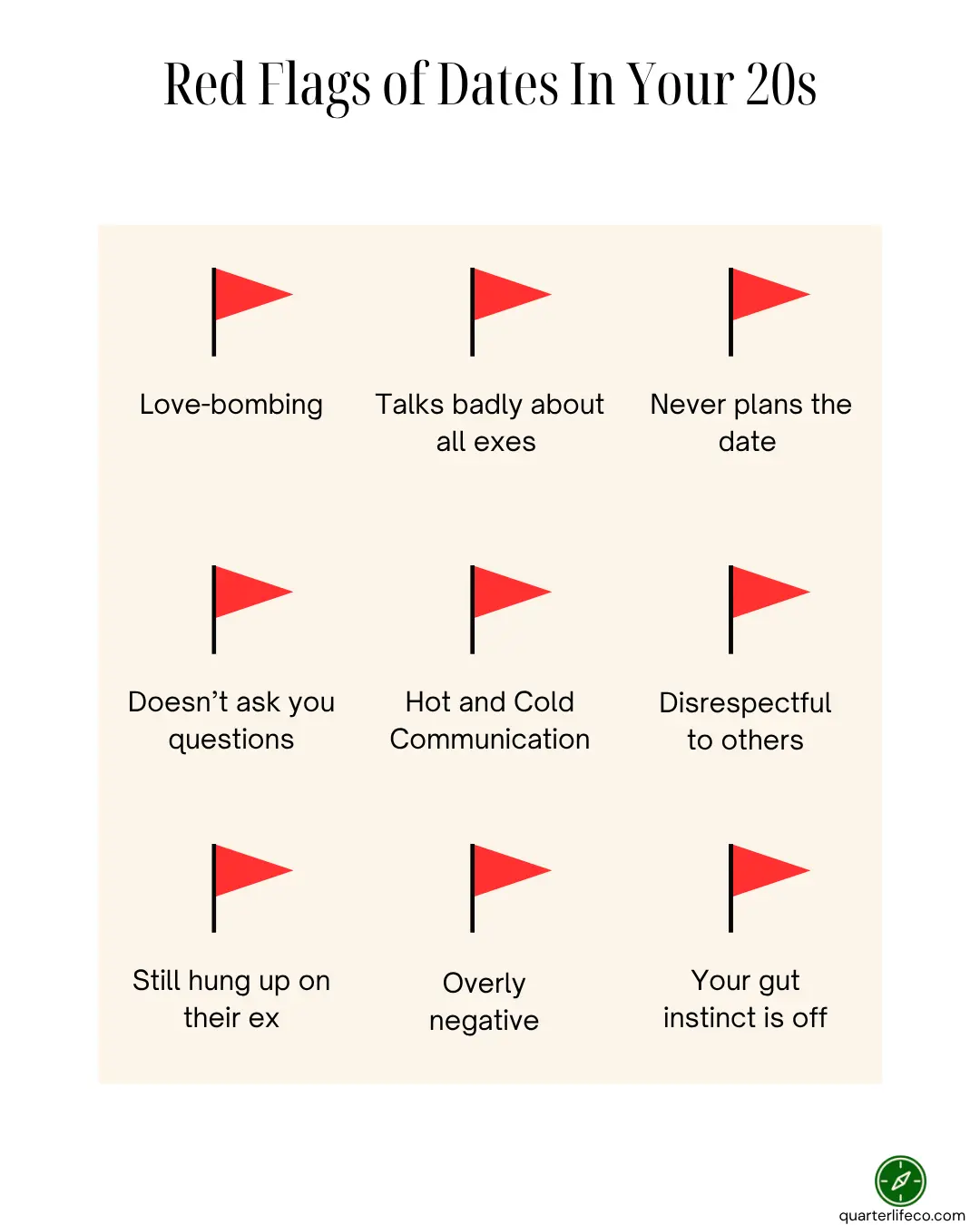
You also attract healthier relationships once you’ve seen patterns through dating and done the internal work. For example, you can spot red flags immediately because you’ve been exposed to different people, whereas someone who hasn’t dated much can’t see those same warning signs right away.
Relationships Aren’t the Magic Pill You Think They Are
The “Fix Me” Fantasy

It’s easy to believe that a relationship in your 20s will fix everything. Make you feel more secure as a person, make you feel complete, less lonely, more content. But this mentality makes people rush into relationships that aren’t right for them. Just because they want the “completeness” that a relationship offers.
It’s important to understand that relationships don’t automatically fix your problems, make you happier, or give you purpose. They can enhance your life. But they won’t complete it.
This “fixing” mindset turns relationships into band-aids for deeper issues like loneliness, insecurity, or lack of direction. And these deeper issues resurface in the relationship eventually, whether in how you treat your partner, how you let your partner treat you, or your mindset in the relationship.
Be Good Alone First
The healthiest relationships happen when you’re already good alone. The key of relationships is that they are enhancers for your life, not a total substitute. When you like your own life, your own goals, friends, and routines, you’re more likely to attract someone who complements, not replaces it.
When you’re looking for a relationship to be a cure, you’re going to inevitably settle or attract people who aren’t right for you. Especially in your 20s, think, do I want a relationship with this person because I actually like them, or am I just bored and want the connection a relationship provides? Getting into seriously dating someone might solve the latter temporarily, but ultimately it’ll lead to an unfulfilling relationship.
Many 20 somethings confuse love with emotional dependence. True partnership is two whole people choosing to share their lives, not “two halves” that are “completing” each other.
Dating in Your 20s Is Superficial and Full of Games
Early 20s: Looks, Ego, and Validation Rule
In your early 20s, looks and ego rule. Most people are still figuring out who they are, so dating becomes a mirror for validation. You chase people who make you feel desirable or seem to boost your image. Looks, status, confidence, and convenience carry more weight than shared values or emotional depth. This isn’t shallowness, it’s just natural development. You’re experimenting, building self-esteem and learning what actually matters to you by getting it wrong a few times.
Dating in your 20s, especially early 20s, are full games. Everyone wants to be chill. No one wants to text back too fast. It’s awkward to ask what you are. And you can’t admit you actually like someone without feeling like you’re losing leverage. To top it all off, people are uncertain about the person they’re dating because they’re still uncertain about who they are.
Mid-20s: The Shine Starts to Fade
As you move through your 20s, this phase starts to fade. The excitement of situationships and being with someone who’s hot but has no emotional depth starts to lose the shine. You start to realize that chemistry fades fast without communication, attraction without trust feels empty, and sexiness only takes a person so far. You then start paying attention to specific characteristics in a person you care about. And that you know you care about because you’ve been through the trial and tribulations of dating in your early 20s.
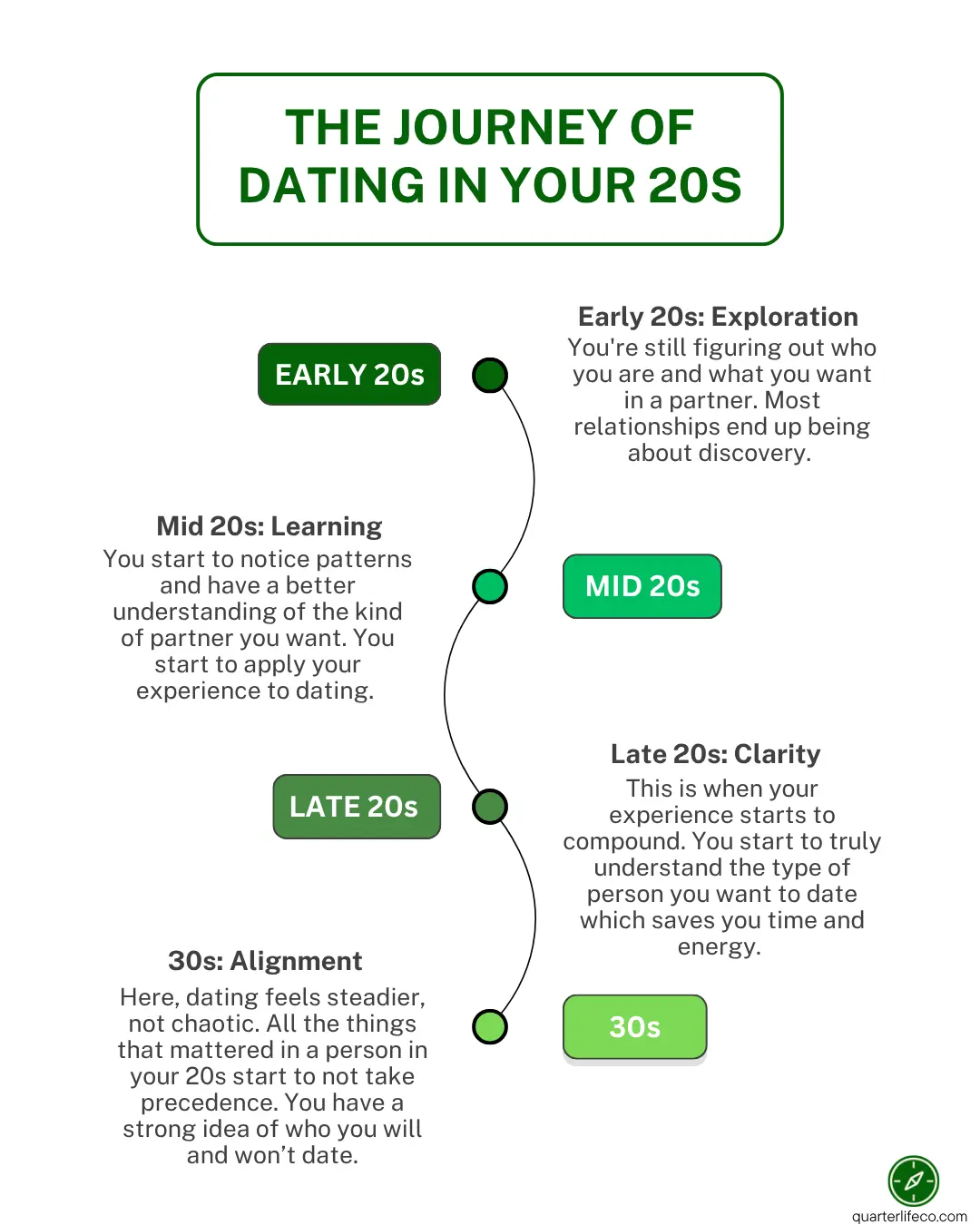
So if you’re in your early 20s and worried this is how dating will be forever, it won’t. As you get into the 2nd half of your 20s, dating gets more clear, because people are more mature in the dating market, but also people you now have more experience with dating.
Conclusion
Dating in your 20s isn’t an easy experience. You’ll make tons of mistakes, get ghosted, fall too fast, miss red flags, and maybe even break a few hearts along the way. But every experience, good or bad, teaches you something about who you are and what kind of future love you want.
So enjoy dating in your 20s. Know it won’t be perfect but know that every experience will shape you in profound ways. Now go out there and find your person or just have fun dating in your 20s, whatever your vibe is!
💞 Summary
- 💔 Most Relationships Won’t Last: And that’s okay. Every dating experience is a lesson future you will carry.
- 📱 Use Dating Apps as a Tool, Not a Lifestyle: Dating apps are just one way to have a dating life. Get out there and meet people in the real world too.
- 🕰️ Timing Is Everything: People change fast in their 20s. Even the right person can show up at the wrong time.
- 🐎 The Four Horsemen of Dating: Ghosting, flakiness, situationships, and rejection are normal. Don’t take them personally.
- 🪞 You’ll Learn More About Yourself: Every date is practice for self-awareness and knowing what you want in a long-term partner.
- 🧍♀️ Relationships Aren’t the Fix: Be happy alone first. A partner should enhance, not complete, your life.
- 🎭 It’s Superficial at First, But It Gets Better: Early 20s dating is full of games and ego, but it gets better as people mature.
Article FAQ
Because your 20s are a decade of growth. People move, change careers, evolve values, and figure out who they are. That constant change makes long-term alignment and commitment hard.
Don’t take it personally. Everyone goes through this while dating in their 20s. This is just the name of the game and trying to convince someone to like you is fruitless. Take the L and move on.
Yes, it becomes much more clear. In your early 20s, there’s a lot of games with dating and to top it off you don’t fully know you are and what you want yet. This combination makes dating difficult to navigate in your early 20s.
A situationship is when you hook up and hang out together, but don’t take it to the next step of serious commitment. Whether you should stay in one is a personal choice. But if both parties are down with this casual relationship with no serious commitment, why not? But if you’re looking for something more serious, waiting for a situationship to blossom rarely works, and distracts you finding the long-term partner you want.
Definitely not. So many people in their 20s are on dating apps, it’s actually smart to be using them. You’ll only increase your odds of meeting someone if you utilize the apps. Just don’t solely rely on dating apps as there’s so many other methods of dating like through hobbies, mutual acquaintances, or events that can produce fulfilling relationships.