You’ve probably heard the advice to travel in your 20s. You’ve got time, freedom, and enough recklessness to make it unforgettable. But no one tells you how to afford it. The truth is, travel in your 20s can be way cheaper than you think. You don’t need the five-star hotels or fancy restaurants. You just need to go! In this guide, we’ll break down how to travel cheap in your 20s and why it’s more doable than you think.
The Power of the American Dollar Abroad
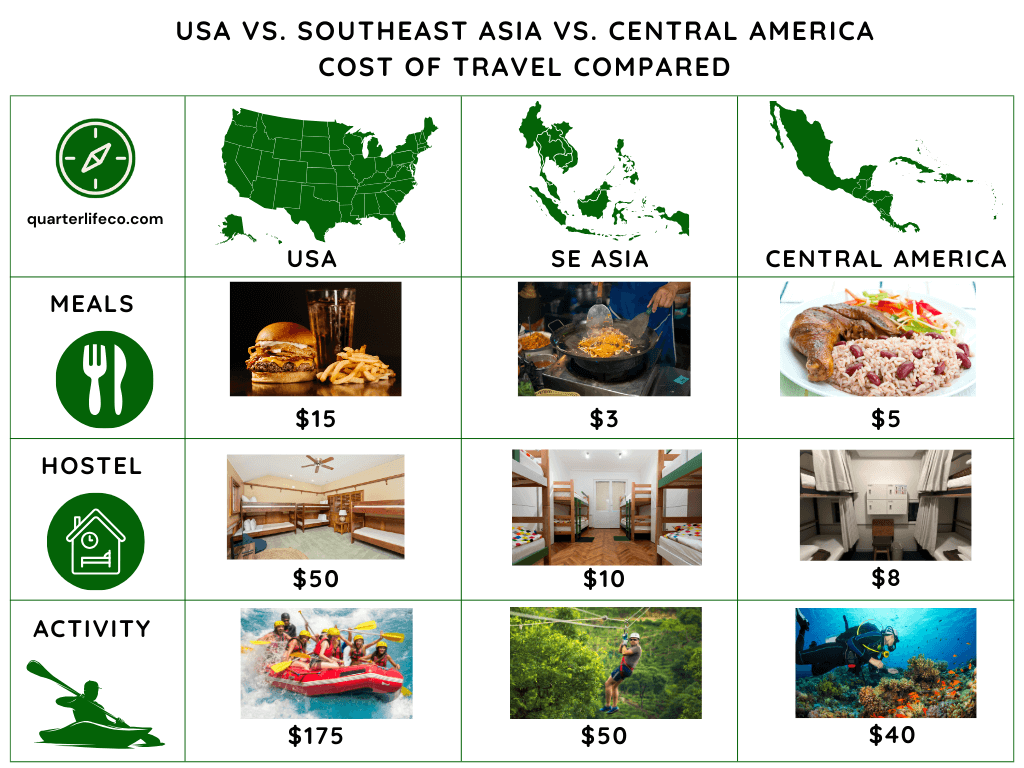
Travel where your dollar stretches further. Think Southeast Asia, Latin America and Eastern Europe. Your U.S. dollar goes a lot further in these regions. When I backpacked Southeast Asia, I rarely spent more than $30 a day, and that covered food, lodging and transportation. If you don’t have rent or bills back home, $900 a month can fully cover your life abroad. Everything is cheaper like meals, hostels and even crazy bucket list experiences. To put it into perspective, I paraglided in Laos for $60 whereas that same experience would’ve been $400 in the US. In the U.S., I’ll spend $12 on a beer during a night out. In Prague, I paid $3. The point is, the dollar works in your favor. Once you’re at your destination, your daily expenses are often lower than what you’d spend just existing in the U.S. Except now, you’re experiencing a whole other country.
Budget Accommodations: Hostels, Homestays & Couchsurfing
Why Hostels Are Better in Your 20s
In your 20s you don’t need fancy hotels. In fact, hostels aren’t just cheaper, they’re better. With hostels, you meet travelers from all over the world. These are people you’d never cross paths with otherwise. To top it off, most hostels run social events like walking tours, family dinners and pub crawls. Meeting new people is half the fun when you’re in your 20s and hostels make this process effortless.
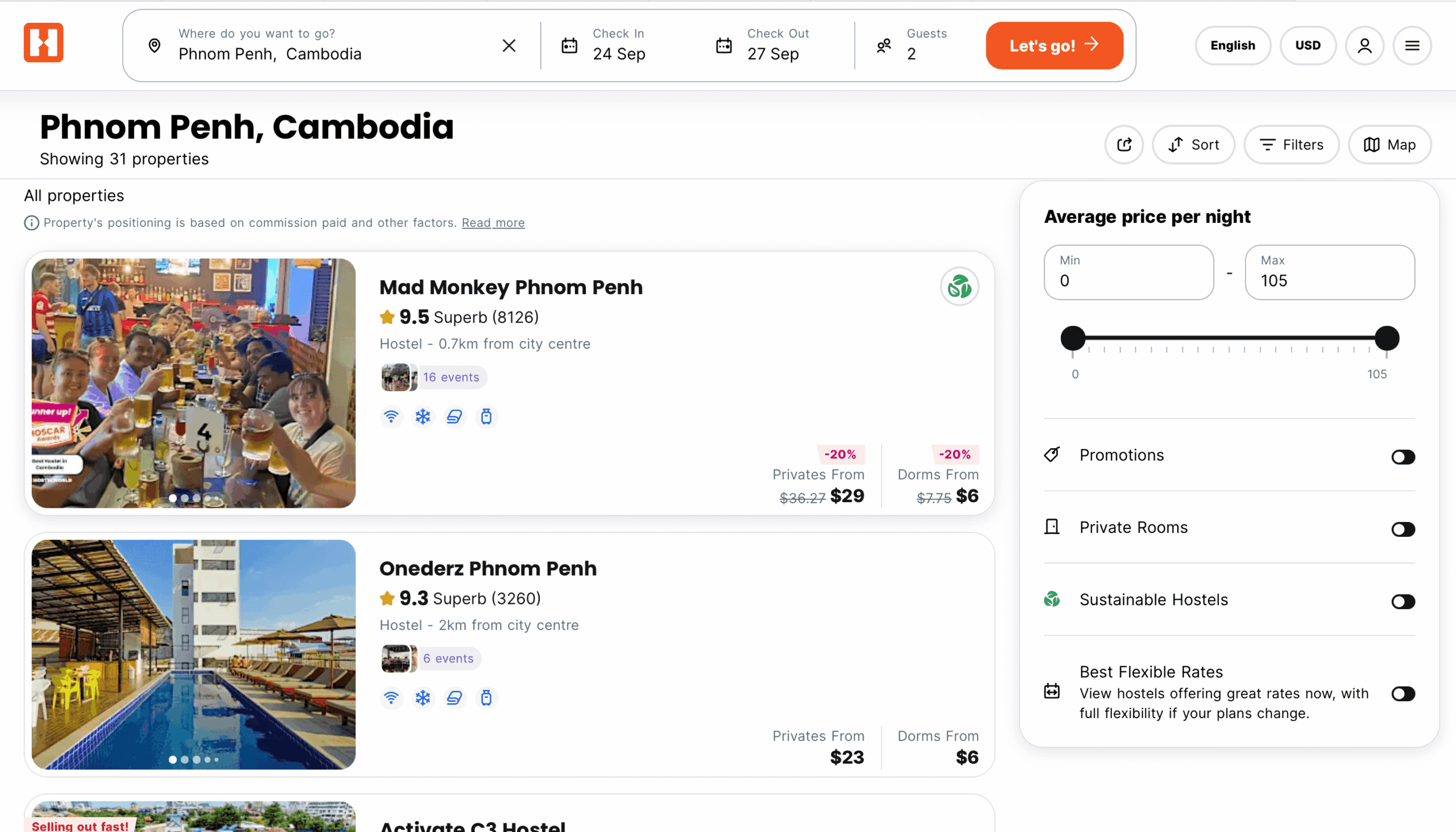
Let’s talk about what you care about most, price. In Phnom Penh, Cambodia, I stayed at one of the most popular hostels for just $6 USD per night. That’s insanely cheap, and prices like that are common across Southeast Asia. Staying in the $100 a night hotel does nothing for your experience. You might get comfort sure. But you lose connection, spontaneity and the crazy opportunities of traveling in your 20s that hostels can provide. It might sound scary at first, but these hostels are perfectly safe and well run. Use a site like Hostelworld to browse hostels, check reviews and book easily. For added peace of mind, many hostels offer women only dorms and they’re still incredibly affordable.
Free Stay Options: Couchsurfing & Workaway
If you’re looking for free stays, there are a couple of great options. Both charge small annual membership fees but after that, your stays are completely free.
The first is a site called Couchsurfing. Here, you stay with locals for free and the experience is often more authentic than any hostel. You’ll get insight into the culture, food, and daily life that most travelers miss.
Another great platform is Workaway. You can trade a few hours of work per day for free food and lodging. It’s a great option if you’re seriously strapped for cash.
Eat Like a Local and Save Big
Skip the touristy restaurants, they’re usually overpriced and forgettable. The best food is found on the side streets with the pop up plastic tables and chairs. You can eat like a king for as little as $5.
These food experiences are much more authentic. Eat the street food, shop at local markets.

If you’re concerned about food hygiene, stick to the busy stalls. If the locals are eating there, it’s probably safe. To reduce risk even more, avoid raw vegetables and drinks. These usually are the riskiest due to the use of dirty tap water with them. But if the food is hot and cooked thoroughly, you shouldn’t have any issues. In my opinion, it’s some of the best food I’ve ever had. Most of my favorite gastronomic experiences came from random street vendors I never would’ve found on Google.
Flights Can Be Shockingly Cheap
Flexibility = Savings
I once bought a one-way ticket to Bali from San Francisco for only $200. That’s what some people spend on two nice dinners. It’s easy to assume that an 8+ hour flight will break the bank, but if you’re flexible with dates and destinations, travel during off-seasons or midweek and use tools like Google Flights or Sky Scanner, you can find hidden gems. The truth is that flexibility = savings and in your 20s you usually have more of it than you realize.
Use Google Explore for Hidden Deals
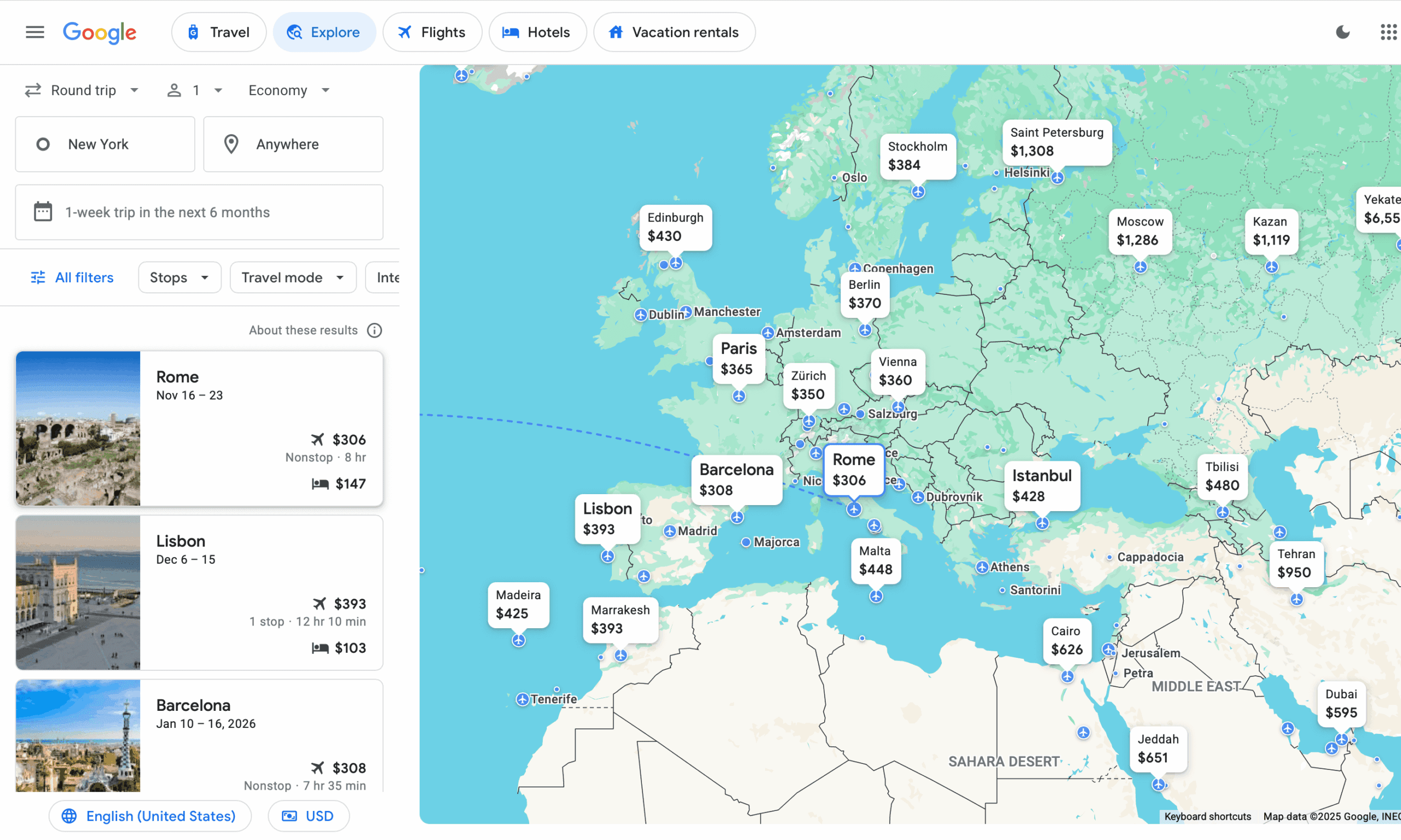
If you’re flexible not just with dates but with destinations, check out Google Explore. You enter your departure airport and set your destination as ‘Anywhere’. It’ll then give you a list of cheap flights around the world with dates and prices. From there, just window shop and find what fits your budget and schedule. There are international flights to Europe for $300. To experience another country for that price point is an insane deal.
When to Book Flights
For added savings, make sure to book at the right time. The sweet spot is usually 1-3 months in advance for domestic flights and 2-6 months for international. Once you’re there, flights between nearby countries are dirt cheap. I flew from Athens to Rome for under $50 one-way through the budget airline Ryanair.
Budget Airlines Get the Job Done
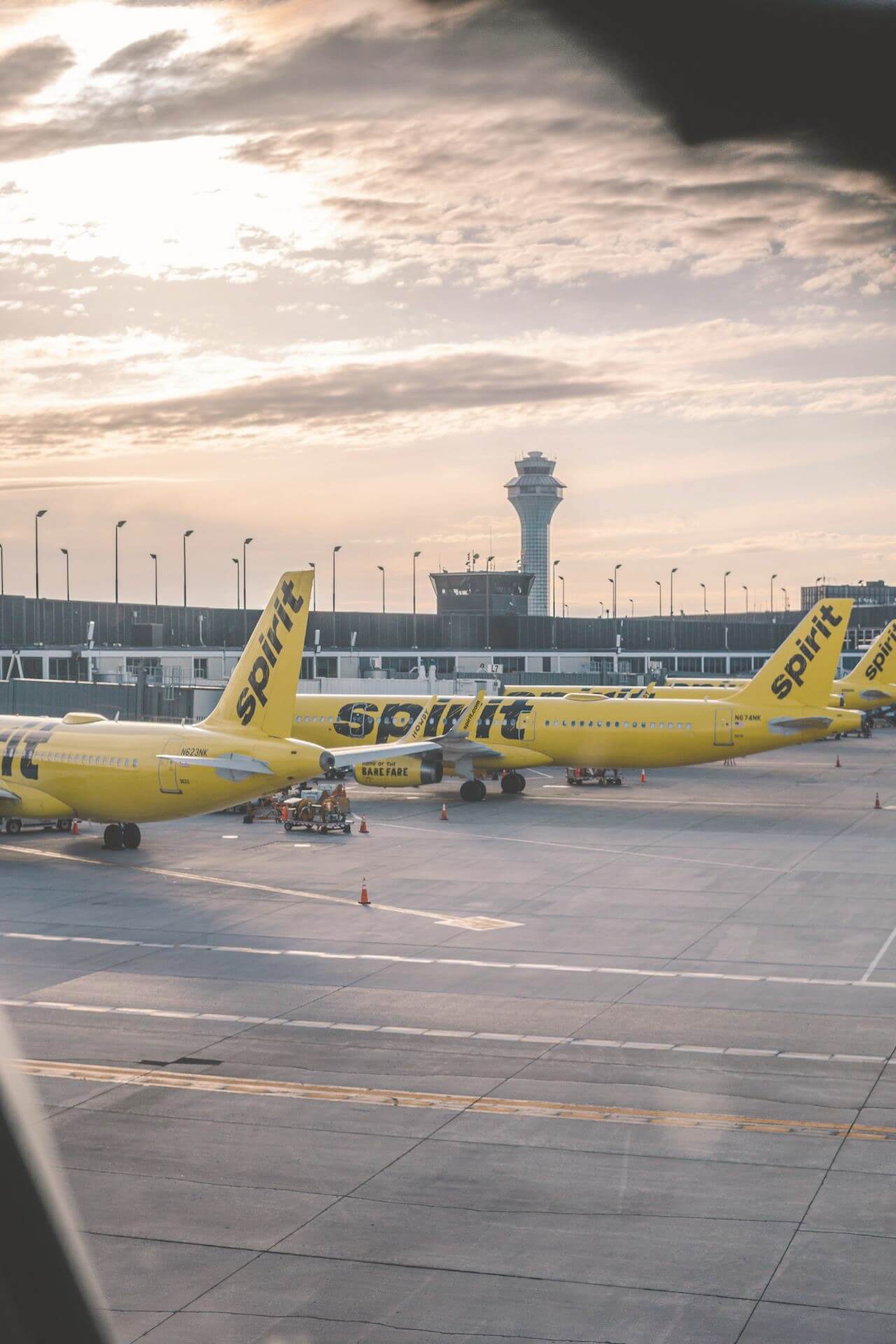
Speaking of budget airlines, use cheaper carriers like Spirit and Frontier when you can. I know they have an iffy reputation, but at the end of the day, they get you from point A to point B. And let’s be honest, do you really need the fancy reclining seats and free snacks in your 20s.
Travel Credit Cards & Points
To save even more, use credit card points or travel cards that earn miles and free flights. I funded my flight to Europe entirely with Chase points. It would’ve cost $800 round trip but I paid nothing.
Make Money While Traveling in Your 20s
Freelancing & Remote Work
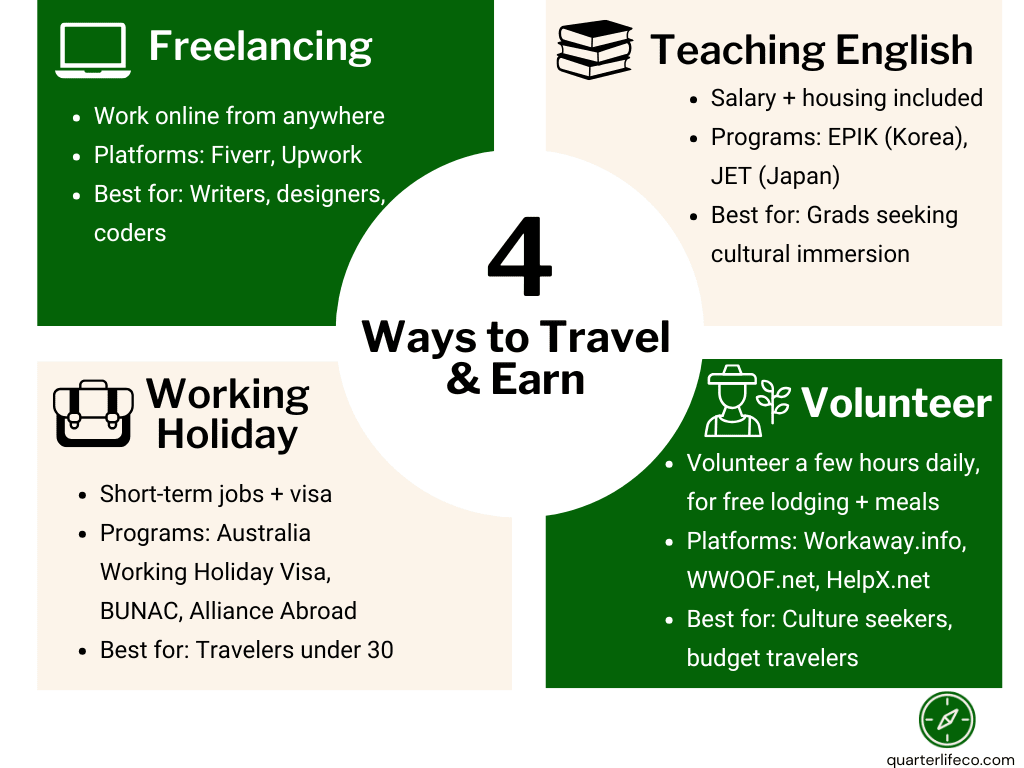
Traveling long-term doesn’t have to mean giving up a paycheck. You can explore the world without draining your bank account. From freelancing to remote work, there are plenty of ways to enjoy the beauty of travel and still bring in income. If you have skills in writing, graphic design, or coding, you can use platforms like Fiverr or Upwork to land gigs. And earning in dollars while spending in pesos, baht, or soles means your money goes a lot further.
Teaching English Abroad
Teaching English abroad is another great option. Countries like South Korea (with the EPIK program) and Japan (with the JET Program) have a strong demand for native English speakers. These programs often cover housing, flights, and a monthly stipend. It’s an affordable way to live overseas and fully immerse yourself in a new culture.
Working Holiday Visas
You can also apply for a working holiday visa in another country. A popular option is Australia, where you can take on short-term jobs in hospitality or farm work while living abroad. It’s a great way to earn money and get a deeper feel for everyday life as a temporary local in another country.
Workaway & WWOOF
Another solid option is Workaway or WWOOF (World Wide Opportunities on Organic Farms). These platforms let you volunteer a few hours a day in exchange for free food and lodging. It’s a great deal if you’re looking for a free place to stay and a more immersive cultural experience.
Final Thoughts: Why Your 20s Are the Time to Travel
The Hidden Cost: Missed Opportunities
The real cost of not traveling now is that the longer you wait, the more expensive it becomes. Not just in dollars but in missed opportunity. Responsibilities stack up. Life gets in the way. And the risk of never going grows.
Most people think that the cost of travel is money. The flights, hostels, food. But the real cost is the time, freedom and curiosity that you’ll never get back if you don’t go.
Your 20s are the freest years you’ll ever have to travel. You likely don’t have a mortgage, spouse or kids yet. You can share a hostel room and actually enjoy the chaos. You can eat the $1 Pad Thai on the side of the street and be in gastronomic heaven. As you age, these rough edges that feel like adventure now become inconveniences. So take advantage of this window while it’s wide open. Don’t fall into the all too common trap “I’ll travel later.” The truth is, the older you get, the more responsibilities pile up. Eventually, later turns into never.
My Personal Story: Quitting Amazon to Travel
I know it’s scary. When I quit my job at Amazon, I didn’t have one lined up. But I had confidence I’d figure it out. I took two months in Europe, came back, and landed a new job. I spent months debating whether I should leave my job, thinking of the money I’d be giving up. But I’m so glad I went. Those two months in Europe augmented my life in ways I can’t even describe in this article. If you’re on the fence about pulling the trigger, this is your sign. In your 20s, don’t think of travel as just a vacation. Think of it as a powerful life experience. It teaches adaptability, sharpens confidences and force you to grow outside of your comfort zone. These are skills that will carry you forward the rest of your life.
Regret Costs More Than Money
Still thinking it’s too expensive? I’ll leave you with one last thing. What would cost you more? The $2000 you spent on a month in Southeast Asia, or waking up at 35 with the regret that you never experienced it. You can always earn more money but you can never get back your 20s again.
✈️ Summary
- 🌍 Your dollar goes further abroad. In regions like Southeast Asia or Eastern Europe, you can live on $30/day.
- 🛏️ Hostels and free stays save big. Hostels, Couchsurfing, and Workaway make accommodations affordable (or free).
- 🍜 Eat like a local for $5. Street food and markets offer the best meals at the lowest prices.
- 💸 Flights are cheaper than you think. Flexibility, budget airlines, and travel credit cards lead to massive savings.
- 💻 You can earn while traveling. Remote work, teaching English, or working holidays give you income.
- ⏳ The real cost is waiting. Your 20s are the freest years to travel. Money returns, but time doesn’t.
Article FAQ
Southeast Asia, Latin America, and Eastern Europe the most affordable regions. Your dollar stretches further with things like food, accommodation, and even acitivites.
Many offer women-only dorms, security lockers, and staff available around the clock. With the Hostelworld app, you can check the reviews of reputable and safe hostels.
It depends on where you go. As of writing this article in 2025, and using the tactics shared, in Southeast Asia or Latin America, $1500 a month could cover lodging, food, and transportation. In Eastern Europe, budget at least $2,000 a month. Many travelers cut costs further with hostels, Couchsurfing, Workaway, and budget flights.
Set a clear travel budget and prioritize destinations where your dollar stretches further. Automate savings before your trip, then use budget tools on the road to track expenses. Also it’s important to note that long-term travelers often spend less abroad than they would on rent, car payments, and dining out at home. So you could actually save money by traveling!
Because your 20s are the freest years of your life, and it’s hard to fully appreciate them until they’re gone. As you age, jobs, mortgages, and family responsibilities make travel harder and more expensive. Many older adults say their biggest regret isn’t the money they spent, but the experiences they never had. That’s why it’s so important to travel when you’re young!